
 Español
 العربية
 Francés
 Русский
 Português
 Deutsch
 Italiano
 Polski
 Malay
Malay
 日本語
日本語
 한국어
한국어
 Nederlands
 Indonesia
 български
 Українська
 فارسی
فارسی
 اوردو
اوردو
 тоҷикӣ
 বাংলা
বাংলা






Zero Turn Mower Configuration Matrix for OEM Buyers
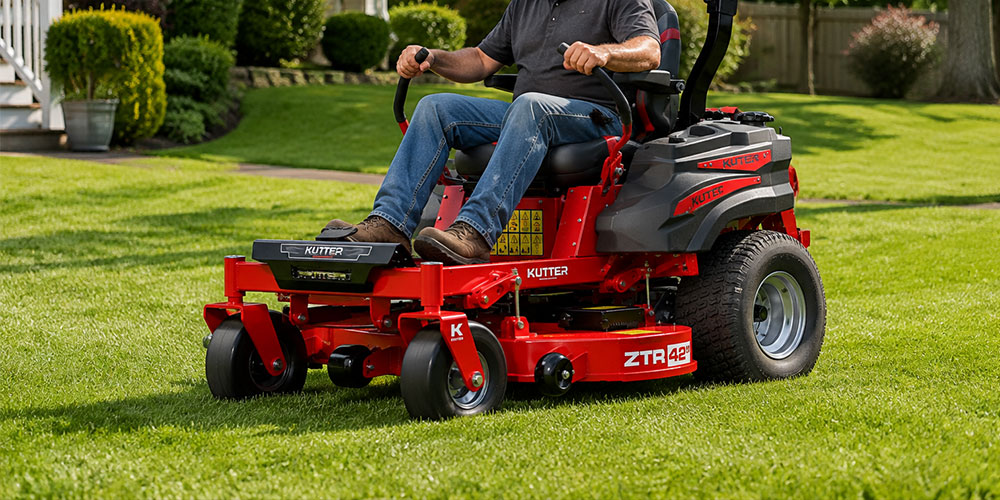
A zero turn mower configuration matrix converts a distributor's market needs into a structured engineering discussion. It helps prevent mismatched assumptions about engine, deck, drivetrain, comfort, controls, branding and destination-market requirements. This page defines selection dimensions; it does not describe the full OEM process, MOQ, logistics or commercial terms.
On This Page
Purpose of the matrix
A zero turn mower configuration matrix converts a distributor's market needs into a structured engineering discussion. It helps prevent mismatched assumptions about engine, deck, drivetrain, comfort, controls, branding and destination-market requirements. This page defines selection dimensions; it does not describe the full OEM process, MOQ, logistics or commercial terms.
Start with the application profile
Before selecting components, document target customer, property size, terrain, annual hours, cut standard, climate, transport constraints, price position and service capability. Mark every requirement as mandatory, preferred or optional. A component choice without an application statement is difficult to validate.
Capture non-negotiable constraints first
Every OEM project has hard boundaries that narrow the configuration early and prevent costly backtracking. List these before discussing preferred components:
Access limits: narrowest gate, tightest turning radius, storage height. A 72-inch deck that cannot enter the customer's property is unsellable regardless of its specifications.
Emissions certification: the destination market's current standard (EPA Tier, CARB, Stage V, CE). Configuring an engine without confirming certification is the most expensive mistake in the matrix.
Fuel availability: diesel, gasoline, or propane infrastructure in the target region. An EFI engine that requires 93-octane fuel is impractical in markets where 87-octane is the premium grade.
Service network radius: the maximum distance your dealers or end-users will accept for parts and warranty support.
Price ceiling: the MSRP the market will bear. Every additional specification pushes the BOM upward; the matrix exists to make those trade-offs visible.
Document constraints before drafting preferences. A manufacturer that receives a matrix with unresolved certification or fuel-access questions will pause the quote and request clarification.
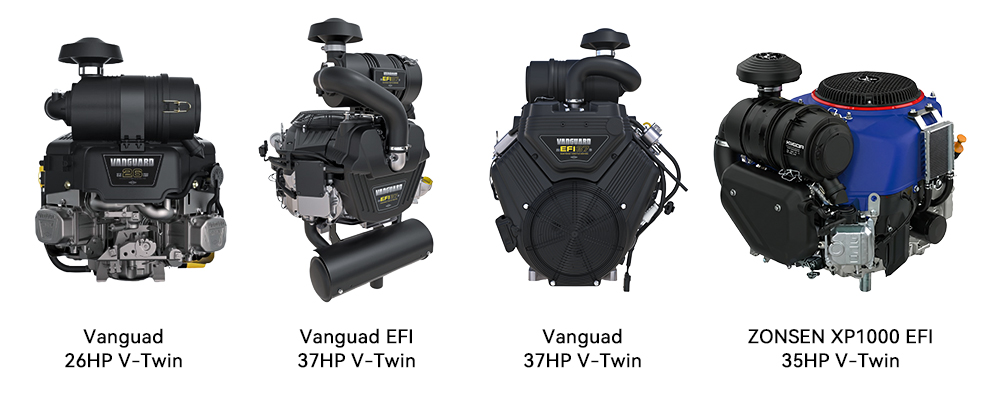
Engine configuration
Record required power class, fuel-delivery preference, emissions or certification destination, fuel availability, ambient conditions, cold-start expectations and local service support. EFI may suit high-utilization or variable conditions, but the final engine option must be confirmed for the selected platform and market. Do not assume every engine can be paired with every chassis.
Deck configuration
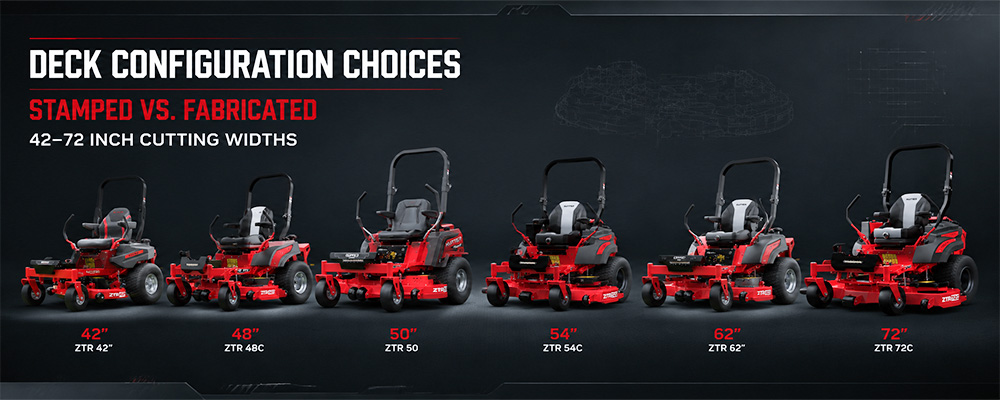
Specify cutting width, stamped or fabricated construction, cutting-height range, discharge or mulching needs, blade count, deck-lift method, anti-scalp requirements and service access. Use stamped vs fabricated mower deck to clarify the structural decision before requesting a final configuration.
Drivetrain and chassis
Define expected machine mass, terrain, speed range, towing or attachment restrictions, target annual hours and service environment. Then discuss hydrostatic transmission class, cooling, tire type, frame requirements and braking or parking controls. Component compatibility and validation remain engineering decisions.
Operator environment
List seat and suspension expectations, control ergonomics, display and hour meter, lighting, rollover-protection requirements, storage, charging points and noise or vibration priorities. Separate legally or safely required items from comfort upgrades so the specification can be costed transparently.
Branding package
Provide brand name, logo artwork, color references, decal language, safety-label requirements, model naming, packaging marks, manual language and serial-label format. Identify which items require regulatory review. Branding cannot override safety labels or compliance information.
Destination-market version
Record country, voltage or charging requirements where relevant, language, climate, applicable certification, importer information, warranty concept, parts plan and documentation needs. KUTTER source material states ISO 9001 and CE standards and global partner support, but each project still requires confirmation of the exact product certification and documents.
Example matrix fields
Create one row per option with the following columns. Use "to be confirmed" instead of filling unknowns with assumptions. Engineering approval should lock the final baseline before artwork and production documents proceed.
| Column | Purpose |
|---|---|
| Category | Engine, deck, drivetrain, operator environment, branding, compliance |
| Requirement | What the market needs, quantified where possible |
| Preferred choice | First-preference specification |
| Acceptable alternative | Fallback if preferred is unavailable or too expensive |
| Reason | Why this choice matches the application profile |
| Target market | Region, customer type, annual hours |
| Validation owner | Who confirms feasibility (manufacturer, third-party lab) |
| Evidence required | Test reports, photos, certificates |
| Status | Requested, confirmed, rejected, pending |
| Change impact | What happens if this choice changes downstream |
Worked example: Mid-tier commercial for Southeastern US
A filled row illustrates how the matrix translates market requirements into engineering discussion. This example describes a mid-tier commercial zero turn aimed at landscaping contractors in the Southeastern United States:
| Field | Entry |
|---|---|
| Category | Deck |
| Requirement | 60-inch fabricated deck, 7-gauge |
| Preferred choice | 60" × 7-gauge fabricated, 3-blade |
| Acceptable alternative | 60" × 10-gauge fabricated (cost-down path) |
| Reason | Route mix includes dormant Bermuda overseeded with ryegrass; stamped decks deflect under spring thatch load |
| Target market | US Southeast, commercial contractors, 400–800 hrs/yr |
| Validation owner | Manufacturer engineering |
| Evidence required | Deck deflection test at 60" × 7-gauge, photos of spindle mounts, paint spec for humidity exposure |
| Status | Requested |
| Change impact | Downgrading to 10-gauge would require a price adjustment and a separate product SKU for light-commercial dealers |
Populate every category — engine, deck, drivetrain, operator environment, branding, destination compliance — with the same level of detail. When the matrix reaches the manufacturer, every question the engineering team would otherwise email back about is answered in the row. A one-page matrix with ten rows covers more ground than a ten-page email thread.
Common misconfigurations to avoid
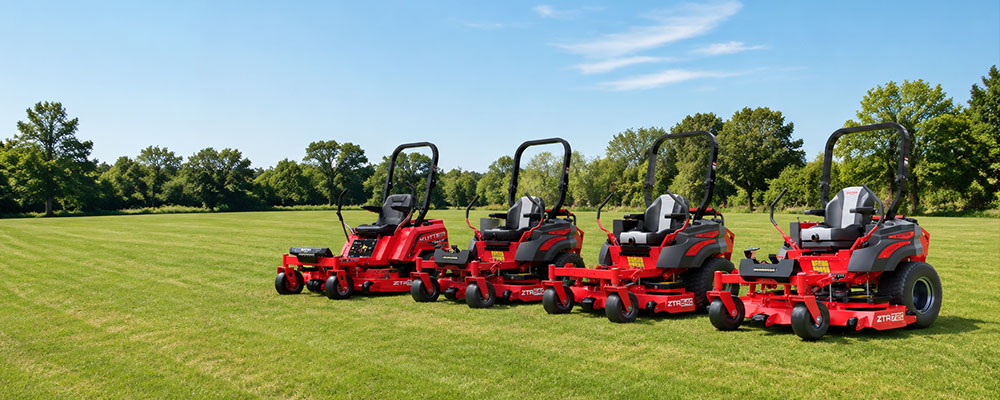
Three patterns repeatedly delay OEM projects and inflate costs:
Building to a competitor's spec sheet instead of your market. A distributor sees a Tier-1 brand's flagship and asks for "the same machine but cheaper." The problem: your dealers may not need a 35HP EFI engine with a suspension seat to compete in their region. Build to your customers' actual routes, workload, and price tolerance — not to what another brand ships to a different market.
Requesting every available upgrade on the first build. A loaded configuration with every comfort and performance option creates a machine that costs more than the market will pay and takes longer to certify. Start with the minimum viable configuration that clears your non-negotiable constraints, then add one tier of upgrades per product cycle.
Submitting the matrix without destination-market documentation. A configuration that lists "CE marking — to be confirmed" but includes no test lab contact, no target certification date, and no budget for compliance testing is not a matrix — it is a wish list. Attach the applicable standards document and identify who will manage certification.
Submit a useful request
Attach the completed matrix, target price position, annual demand estimate, launch timing and reference images. Review the OEM-ODM mower manufacturing guide, visit the KUTTER OEM program, and contact KUTTER engineering. The matrix starts the technical conversation; it is not itself a production commitment.
Frequently Asked Questions
What is a zero turn mower configuration matrix?
A structured specification document that maps market requirements (terrain, customer type, price point) to engineering choices (engine model, deck gauge, transmission class, branding). It replaces a scattered email thread with a single auditable record that both the buyer's procurement team and the manufacturer's engineering team can reference.
Can I put any engine in any zero turn chassis?
No. Engine-chassis pairing requires engineering validation on mounting points, cooling airflow, drivetrain compatibility, weight distribution, and emissions certification for the destination market. The configuration matrix captures your preference; the manufacturer confirms what is technically possible. Do not assume interchangeability.
How do I choose between stamped and fabricated deck?
Match to the end-user workload. Stamped decks suit residential and light-commercial applications under 200 hours/year; fabricated decks (7-gauge) are built for 500+ commercial hours with frequent impact exposure.
What certifications do I need for my market?
This varies by country and sometimes by state. Common requirements include CE marking (EU), EPA/CARB emissions compliance (US), and electrical safety standards. Provide your destination country early in the configuration process — retrofitting for certification after production starts is expensive and slow.
What's the difference between EFI and carbureted for OEM builds?
EFI engines add roughly $800–$1,500 to the BOM but eliminate choke-start procedures, auto-adjust for altitude, and typically deliver 10–20% better fuel economy. For OEM buyers targeting high-hour commercial users, EFI often justifies its premium at the point of sale. For price-sensitive entry-level markets, a well-tuned carbureted engine keeps the MSRP competitive. Run the break-even calculations in our EFI vs carburetor analysis.
How long does the configuration-to-production timeline typically run?
A straightforward OEM build — existing platform, standard engine option, minor branding — can move from approved matrix to production samples in 8–12 weeks, assuming certification documentation is already in hand. A new deck size, a novel engine-chassis pairing, or first-time certification for a new destination market can extend to 16–24 weeks. The largest variable is rarely the factory; it is the certification and documentation chain.
Ready to Configure Your Zero Turn Line?
Download the matrix template, fill in your market requirements, and start the technical conversation with KUTTER OEM engineering.

Have Questions About OEM Configuration?
Our engineering team can review your matrix draft and confirm platform compatibility before you submit a formal request.
Contact Us
Related Products

ZTS-32B
hot selling index
LB1
hot selling index
LESU24-130
hot selling index
