
 Español
 العربية
 Francés
 Русский
 Português
 Deutsch
 Italiano
 Polski
 Malay
 日本語
 한국어
 Nederlands
 Indonesia
 български
 Українська
 فارسی
 اوردو
 тоҷикӣ
 বাংলা






Property Management Mowing Equipment: Choosing Lawn Tractors for Multi-Site Maintenance
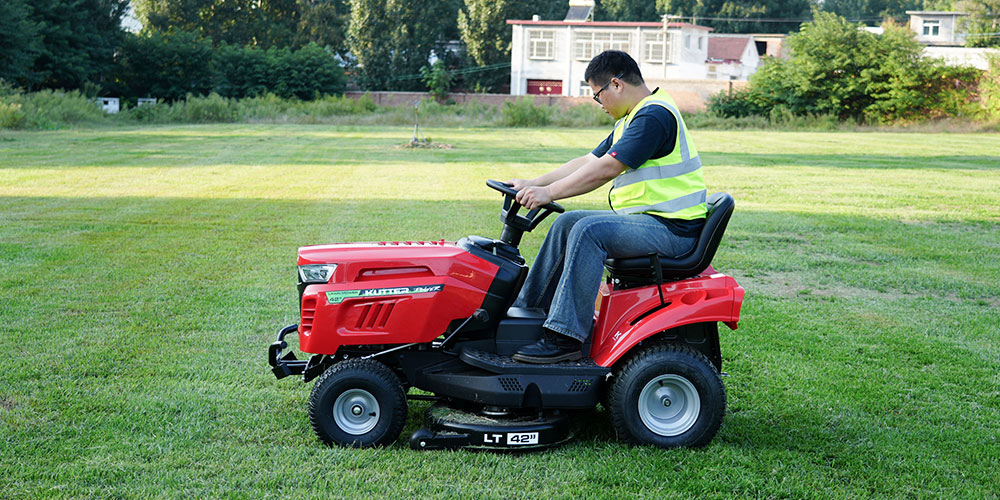
A property manager does not buy one lawn tractor for one lawn — they buy equipment to cover a portfolio of sites with different sizes, obstacles, expectations and schedules. The right answer is rarely "one machine" and never "the biggest one." This guide walks through how to choose property management mowing equipment, with lawn tractors as the core option: what to evaluate per site, when a lawn tractor is the right tool, and when it is not, plus how to standardize a multi-site fleet on maintenance, operators and cost.
On This Page
Step 1: Inventory Your Sites
Equipment decisions start with a portfolio inventory, not a brochure. For each managed site, record the basics:
| Site data | Why it matters |
|---|---|
| Total turf area | Sets the machine-size range |
| Largest continuous area | Drives deck width selection |
| Obstacles (trees, beds, gates) | Affects machine type and deck |
| Slope and terrain | Drives transmission and tire choice |
| Mowing frequency | Drives hours per week and crew size |
| Access/transport | Determines towing and trailer needs |
| Finish expectations | Sets bagging/mulching/side-discharge needs |
| Site contact rules | Hours, noise, chemical, parking limits |
Sum the hours: total weekly mowing hours across sites, plus transport time between them. That total — not the largest single lawn — is what the equipment must cover.
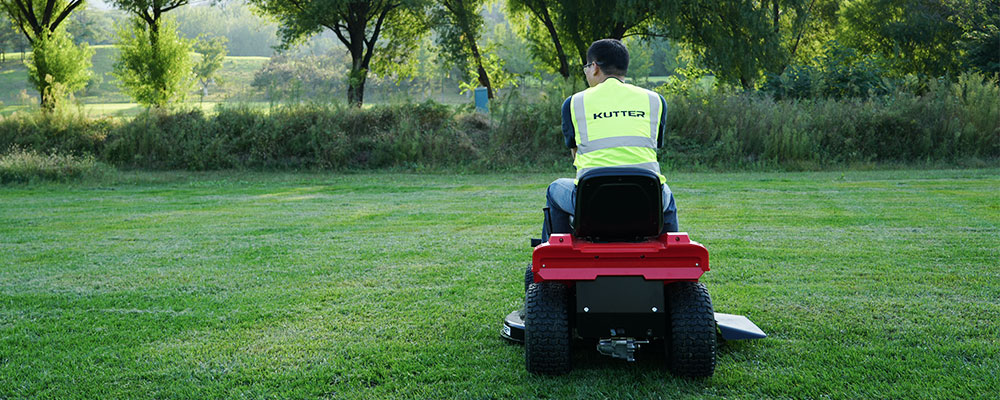
Step 2: Decide When a Lawn Tractor Is the Right Tool
A lawn tractor fits when several conditions are true:
| Condition | Lawn tractor suits | Better served by another machine |
|---|---|---|
| Turf area per site | 1–5+ acres of open, fairly flat turf | Very small or very large sites |
| Terrain | Moderate slopes, manageable obstacles | Steep, rough, or heavily bedded |
| Operator | Comfort and ease of operation valued | Highly specialized tasks |
| Tasks beyond mowing | Towing, hauling, attachments useful | Only pure finish mowing |
| Budget | Mid-range purchase, low operating complexity | Max productivity per dollar |
| Transport | Trailer-able, standard machine size | Ultra-wide decks needing special trailers |
The classic trap is buying the largest lawn tractor because it is "powerful," when the actual bottleneck is transport time or operator hours. A lawn tractor that fits the trailer and the gates beats a bigger one that does not.
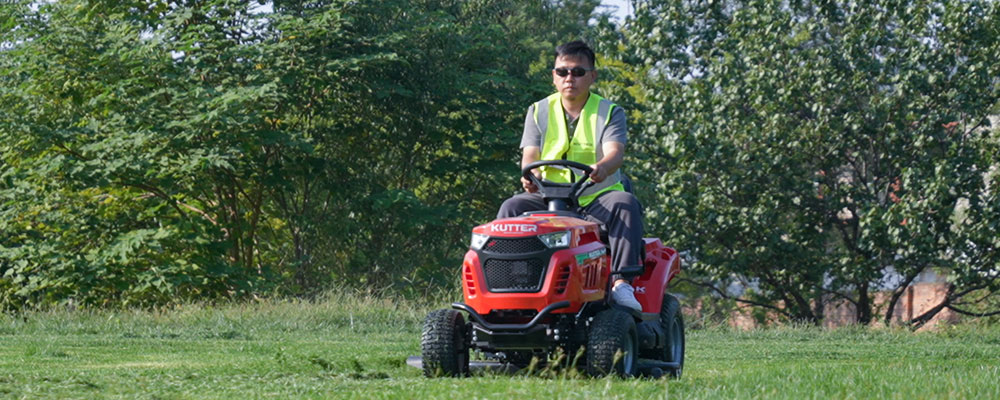
Step 3: Size the Machine to the Portfolio
For a multi-site portfolio, size the machine to the typical site, with a backup strategy for the extremes:
| Deck width | Fits | Typical use |
|---|---|---|
| 36–38 inches | Tight properties, gates, mixed lots | Rear or side discharge, nimble |
| 42–46 inches | Mid-size commercial/residential lots | The multi-site "sweet spot" |
| 48–54+ inches | Large open areas, fewer obstacles | Fastest acres/hour on open turf |
A 36-inch rear-discharge lawn tractor is a strong choice for gated, residential-style commercial properties where finish quality and maneuverability matter more than raw acres per hour. For portfolios with bigger open parcels, move up in deck width. Match the machine to the largest recurring site, and plan overflow coverage for the rare large job.
Step 4: Choose Collection and Deck Configuration
Multi-site work meets very different finish expectations. The collection/discharge decision is per-site but the fleet decision is standardization:
| Configuration | Best for | Trade-off |
|---|---|---|
| Side discharge | Bulk mowing, speed | Clippings visible |
| Rear discharge | Consistent spread, finish near beds | Slightly slower |
| Mulching kit | Frequently mowed turf, no removal | Wet grass limits |
| Bagger/grass collection | Premium finish, leaf season | Dump stops, cost |
Property managers often standardize on one discharge type across the fleet — it simplifies parts, training and operator habits. If some sites demand bagging, buy collection-capable machines for those sites specifically rather than outfitting the whole fleet.
Step 5: Plan Transport and the Machine-Trailer Match
Multi-site means every machine is transported regularly. Transport planning is part of the equipment decision:
| Transport factor | Check |
|---|---|
| Trailer width/ramps | Machine fits with attachments on |
| Tow vehicle rating | Trailer + machine + gear within limits |
| Loading procedure | Ramps, tie-downs, daily cycle |
| Site access | Gates, parking, storage at each site |
| Fuel/charging logistics | Where machines are stored and fueled |
A machine that is easy to load and unload daily saves more hours per year than a marginal deck-width advantage. Include loading time in the ROI — it is real labor.
Step 6: Standardize Operators, Maintenance and Spare Parts
Multi-site fleets fail on standardization long before they fail on specifications:
| Standardization area | Practice |
|---|---|
| Operator training | Same checklist and procedure at every site |
| Maintenance schedule | One interval system, one service log |
| Spare parts | Common parts (blades, belts, filters) stocked |
| Service provider | One dealer/technician relationship |
| Backup plan | One spare machine or loaner arrangement |
Standardization reduces the fleet's total cost and its operational risk. A common parts kit for two or three standardized machines is far cheaper than unique parts for five different models.
Cost View: Total Cost of the Portfolio
| Cost line | Consideration |
|---|---|
| Purchase (per machine) | Sized to typical site, not the largest |
| Transport | Trailer, tow vehicle share, loading labor |
| Maintenance | Common parts, scheduled service |
| Downtime | Backup coverage in peak weeks |
| Operator training | One standard procedure |
| Resale | Standard models hold value and are easier to sell |
Frequently Asked Questions
What is the best lawn tractor size for a property management company?
Match the deck to the typical site in your portfolio: 36–38 inches for gated and tight properties, 42–46 inches for the common mid-size commercial/residential range, and wider decks only where open turf dominates. Size to the recurring site, not the rare largest job.
Should a property manager buy lawn tractors or zero-turn mowers?
Both have roles. Lawn tractors suit open, moderate turf with towing/attachment needs and comfortable operation; zero-turn mowers win on maneuverability and speed in bedded, complex properties. Choose per site profile, and many portfolios standardize on one type plus specialized machines for the exceptions.
How many mowers does a property management company need?
Calculate total weekly mowing hours, divide by the productive hours of one machine per week, and add backup capacity for peak weeks and downtime. The number depends on portfolio size, machine speed and transport time — not on how many sites you have.
Is a rear-discharge or side-discharge lawn tractor better for property management?
It depends on the finish standard and the properties. Rear discharge spreads clippings more consistently and finishes cleanly near beds and walls; side discharge is faster on open turf. If finish quality across varied sites is the priority, a rear-discharge lawn tractor is often the better standard.
Can one lawn tractor cover multiple sites in a day?
Yes — transport time is the constraint. A trailer-able, standard-size machine can move between sites daily if the tow setup and loading procedure are efficient. Count loading and travel time in the route plan; multi-site daily coverage is realistic when sites are clustered.
How do I choose equipment for a portfolio with very different site sizes?
Standardize on the machine that fits the largest recurring site, cover the small and tight sites with the same model if it fits the gates, and plan contractor or rental coverage for rare extreme jobs. Avoid buying one machine per site size — standardize and overflow. Review the lawn tractor range and speak with a KUTTER sales representative to match machines to your portfolio data.
Bottom Line
Property management mowing equipment is a portfolio decision, not a single-machine purchase. Inventory your sites, match the machine to the typical property, standardize on one platform, and plan transport as carefully as mowing time. The fleet that is easy to maintain, easy to move, and easy to train is the fleet that keeps costs down and uptime high.
Start with the portfolio data, size to the recurring site, and standardize everything else — parts, training, and service — around that choice.

Need Help Matching Equipment to Your Portfolio?
We will size lawn tractors for your multi-site operation, recommend standardization strategy, and build a fleet plan — no obligation.
Contact Us
Related Products
LB2
hot selling index
LB1
hot selling index

ZTS-42B
hot selling index