
 Español
 العربية
 Francés
 Русский
 Português
 Deutsch
 Italiano
 Polski
 Malay
Malay
 日本語
日本語
 한국어
한국어
 Nederlands
 Indonesia
 български
 Українська
 فارسی
فارسی
 اوردو
اوردو
 тоҷикӣ
 বাংলা
বাংলা






Hydrostatic vs Manual Lawn Tractor Transmissions: Cost, Control and Maintenance
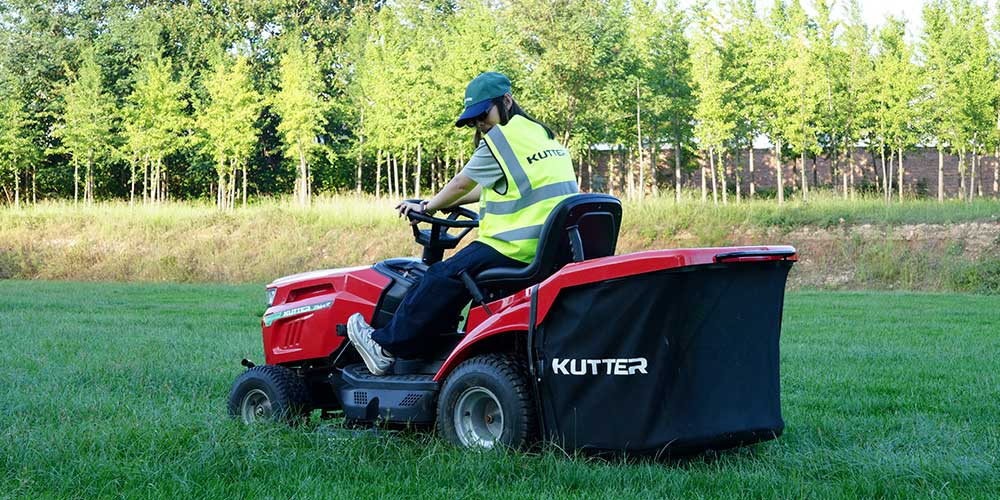
The transmission is the part of a lawn tractor most buyers never think about — until they mow their first slope or make their hundredth U-turn. The choice between hydrostatic vs manual transmission determines how the tractor feels to operate, how much it costs, how often it needs service, and which customers it fits. This guide compares the two systems honestly: control experience, purchase cost, maintenance burden, slope behavior and the buyer profiles each one serves.
On This Page
What Each Transmission Type Actually Is
Manual (gear drive)
A manual or gear-drive lawn tractor transmission uses mechanical gears, selected through a lever or pedal, with a friction or gear clutch. The operator chooses the gear range, and the tractor moves at a speed determined by engine RPM and that gear. Gear drives are simple, mechanically efficient in a fixed gear, and typically lower-cost to manufacture and buy.
Hydrostatic
A hydrostatic transmission uses hydraulic pumps and motors to convert engine power into drive motion. Speed is varied continuously — the operator pushes a pedal (or moves a lever) and the tractor moves at any speed between zero and maximum, with no shifting. Hydrostatic is often called "automatic," and it is an automatic-style system, but the correct technical term is hydrostatic: a true automotive automatic transmission is a different mechanism. Don't use the two interchangeably in spec comparisons.
| Feature | Manual (gear drive) | Hydrostatic |
|---|---|---|
| Speed control | Fixed gears, shift to change | Infinite, pedal/lever |
| Clutch | Gear/friction clutch | None — hydraulic |
| Operator effort | More steps on slopes/U-turns | Continuous, smooth |
| Mechanical efficiency | High in a fixed gear | Slightly lower, some loss |
| Service complexity | Simple, mechanical | Hydraulic fluid/filter care |
| First cost | Lower | Higher |
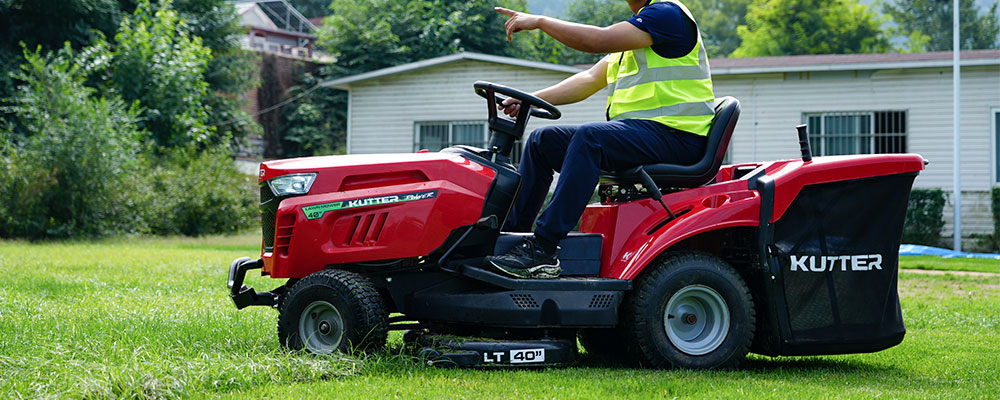
Control Experience: Where They Differ Most
The control difference is most visible in the three situations that make up most of a mowing session: slopes, frequent direction changes and slow trimming.
| Situation | Manual | Hydrostatic |
|---|---|---|
| Mowing up a slope | Shift to a lower gear first | Pedal continuously adjusts |
| Frequent U-turns | Clutch + shift each turn | Smooth pedal transition |
| Slow trim near obstacles | Risk of stalling in wrong gear | Fine speed control |
| Operator learning curve | Requires gear sense | Intuitive for most users |
| Fatigue on long jobs | More left-hand/left-foot work | Less shifting effort |
For a homeowner who mows a flat lot once a week, a manual gear drive is perfectly serviceable — you find the right gear and go. For anyone who mows slopes, makes constant turns around trees and beds, or mows for long hours, the hydrostatic's continuous speed control removes a steady stream of small interruptions. That is the single biggest reason hydrostatic dominates the premium and commercial segments.
Cost Comparison: Purchase and Maintenance
| Cost line | Manual (gear drive) | Hydrostatic |
|---|---|---|
| Purchase price | Lower (typical budget-to-mid) | Higher (typically premium) |
| Fluid service | Transmission oil per manual | Hydraulic fluid + filter per interval |
| Clutch wear parts | Friction clutch wears over time | None (no mechanical clutch) |
| Repair complexity | Simpler, parts often cheaper | Hydraulic components costlier |
| Resale value | Lower | Higher (market preference) |
| Total cost of ownership | Lower initial, higher labor on some repairs | Higher initial, smoother operation |
The maintenance story is a trade-off. Manual transmissions are mechanically simple, but the clutch is a wear item and gear shifting components need adjustment. Hydrostatic units have fewer mechanical wear parts in the shifting path, but they demand correct fluid level and clean fluid — running low on hydraulic fluid or skipping filter service is the classic cause of premature hydrostatic failure.
Maintenance: What Each Transmission Needs
| Maintenance item | Manual | Hydrostatic |
|---|---|---|
| Fluid level check | Transmission/axle oil per manual | Hydraulic fluid level per manual |
| Fluid change interval | Per manual (often less frequent) | Per manual (fluid + filter) |
| Clutch adjustment | Yes, periodic | None |
| Belt condition | Drive belt inspection | Drive belt inspection |
| Air in system | N/A | Bleeding after service per manual |
| Diagnostics | Mechanical inspection | Hydraulic pressure checks |
The single most important maintenance rule for hydrostatic: use the exact fluid the manual specifies and keep it clean. Contaminated or wrong fluid is the leading cause of hydrostatic transmission failure. For manual units, the equivalent rule is keeping the clutch adjusted and the linkage free.
Which Buyer Should Choose Which?
| Buyer profile | Better fit | Reason |
|---|---|---|
| Budget-conscious, flat small lot | Manual gear drive | Lower cost, simple operation |
| Sloped property, frequent turns | Hydrostatic | Smooth control, no constant shifting |
| Older operator or limited mobility | Hydrostatic | Less pedal/clutch effort, smooth speed |
| Property manager, frequent stops | Hydrostatic | Fast, effortless direction changes |
| Mechanically inclined DIY owner | Either | Manual is simpler to repair |
| Premium turf, long mowing sessions | Hydrostatic | Less fatigue, finer speed control |
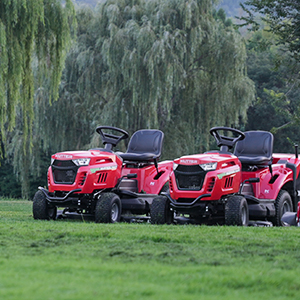
A 38-inch side-discharge lawn tractor is a good example of how transmission choice fits a machine class: at this size, buyers are typically homeowners with moderate lots, and the transmission choice splits the line between budget gear-drive models and premium hydrostatic versions. The right answer depends on the terrain, the operator and the budget.
Common Misconceptions
"Automatic and hydrostatic are the same thing." They are related but not identical. Hydrostatic is the specific technology used in most lawn tractor "automatics"; a true torque-converter automatic is a different system. Check the spec sheet for what a model actually uses.
"Hydrostatic is always worth the extra cost." Only if the terrain and usage justify it. On a flat, small lot mowed weekly, the premium buys little.
"Manual transmissions are obsolete." They still occupy the budget segment for a reason — lower cost and simple, predictable operation.
"Hydrostatic needs no maintenance." It needs correct fluid level, clean fluid and scheduled filter service. Neglect is the main failure cause.
Frequently Asked Questions
Is hydrostatic better than manual on a lawn tractor?
For most buyers, hydrostatic is easier and more comfortable to operate — especially on slopes, in tight areas and on long jobs. But "better" depends on budget and terrain: on a flat, small lot, a manual gear drive is cheaper and perfectly adequate. Evaluate the terrain and the operator before paying the hydrostatic premium.
How long does a hydrostatic transmission last on a lawn tractor?
Lifespan depends on build quality, usage and maintenance — with proper care (correct fluid, clean fluid, scheduled service), a hydrostatic can last for many seasons. Neglect — low fluid, wrong fluid, skipped filter service — is the main cause of premature failure. There is no single guaranteed lifespan for all units.
Can I tow with a hydrostatic lawn tractor?
Towing capability varies by model and manufacturer, and overloading any lawn tractor drivetrain can cause damage. Follow the manufacturer's towing limits for your specific model. Hydrostatic units are generally not designed for heavy sustained towing; check the manual before using a tractor to move loads.
Do manual lawn tractors still exist?
Yes — gear-drive (manual) lawn tractors remain common in the budget and mid segments. They are lower-cost and mechanically simple, and they suit flat, straightforward mowing. Hydrostatic dominates the premium segment because of its control comfort.
Which transmission is easier to maintain?
Each has its own routine. Manual units need clutch adjustment and linkage care; hydrostatic units need correct fluid level, clean fluid and periodic filter service. Neither is "maintenance-free." Follow the manual's schedule for whichever type you choose.
How do I choose the right transmission for my property?
Match the transmission to the terrain, the operator and the budget: flat small lots and tight budgets point to manual; slopes, frequent turns, long sessions and comfort point to hydrostatic. Review the lawn tractor range and compare the transmission specs on each product page, or ask the KUTTER sales team for a recommendation based on your property.
Bottom Line
The right transmission is the one that matches your terrain, your budget, and your operator's comfort. Hydrostatic wins on control and fatigue for complex properties; manual wins on cost and simplicity for flat, straightforward lots. Verify the actual transmission type on the spec sheet, follow the maintenance schedule, and choose based on real use — not on labels alone.

Need Transmission Advice?
We will match your terrain, budget, and operator profile to the right transmission type — no obligation.
Contact Us
Related Products
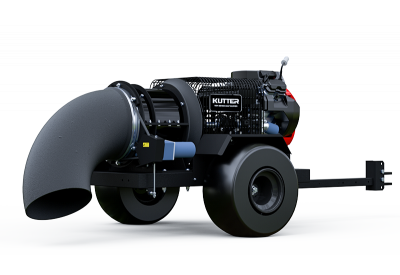
TLBSU26
hot selling index

LT-34R
hot selling index

ZTR-72C
hot selling index
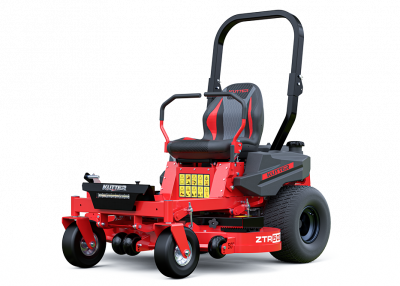
ZTR-50B
hot selling index