
 Español
 العربية
 Francés
 Русский
 Português
 Deutsch
 Italiano
 Polski
 Malay
Malay
 日本語
日本語
 한국어
한국어
 Nederlands
 Indonesia
 български
 Українська
 فارسی
فارسی
 اوردو
اوردو
 тоҷикӣ
 বাংলা
বাংলা






Rear vs Side Discharge Lawn Tractors: A European Buyer Guide
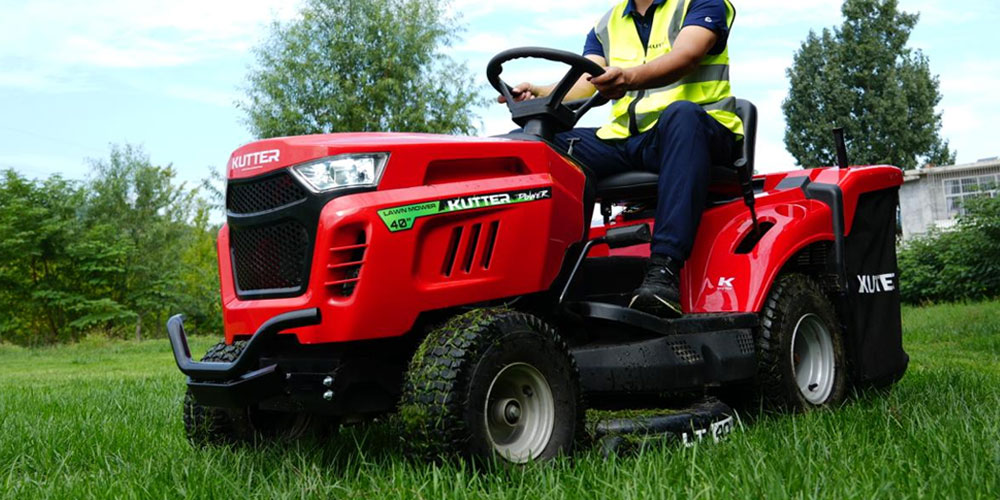
Quick answer: A side discharge deck throws clippings out through a chute on one side — fast in heavy growth, but it needs clear space beside the machine. A rear discharge deck drops clippings behind, between the wheels — tidy on formal lawns, workable on both sides of the machine, and the natural base for rear collection.
This guide is for European dealers, importers and grounds buyers choosing which deck layout to stock or specify. It will help you match a machine architecture to the sites your customers actually cut — wet spring growth, narrow estate access, formal lawns with a finish standard, and hedged boundaries.
On This Page
What Is the Actual Mechanical Difference?
Both layouts cut with a horizontal deck under the machine. The difference is where the clippings exit.
Side discharge has an opening, usually with a chute or deflector, on one side of the deck. Material leaves sideways, in a continuous stream, while the machine keeps moving at working speed.
Rear discharge has the opening at the back of the deck. Material is dropped behind the machine, typically between the rear wheels, so the tractor can pass over it or collect it.
That one difference in geometry drives everything else: how close you can trim, which side of the machine is safe to stand near, how the machine behaves in wet growth, and whether a collector can be fitted behind the deck.
Cutting width and discharge layout are separate choices, and they are often conflated on an order line. Width sets how much ground one pass covers; layout sets where the material goes. The same width can be supplied in either layout, so "42-inch" on its own is an incomplete specification.
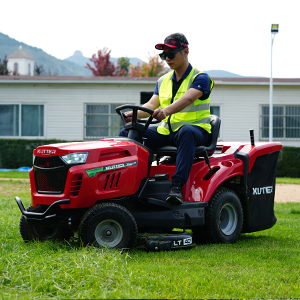
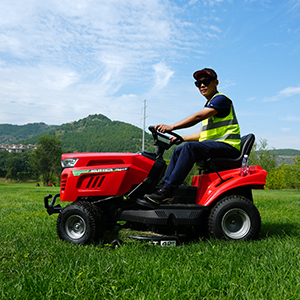
Within the lawn tractors range, both layouts appear at several cutting widths. The width changes capacity; the layout changes where the material goes. Specify both.
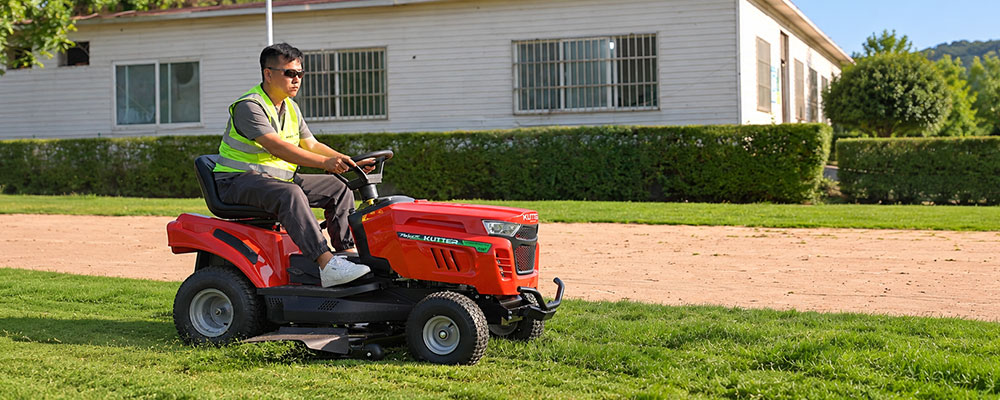
Which Deck Layout Fits Which European Site?
| Site condition | Rear discharge | Side discharge | Deciding factor |
|---|---|---|---|
| Formal lawn, finish standard | Strong fit | Leaves a windrow | Where the clippings land |
| Wet spring growth | Works, slower in heavy cuts | Strong fit | How fast material clears |
| Narrow access and gateways | Strong fit | Needs side clearance | Chute overhang |
| Trimming along walls, fences, hedges | Either side usable | One side only | Which side you can approach |
| Long runs, time-limited windows | Adequate | Strong fit | Throughput in heavy growth |
| Footpaths and public areas nearby | Strong fit | Requires clear space | Direction of thrown debris |
Use the table on a real site visit. Walk the boundary, note where the machine must pass close to walls or planting, and note how much side space exists on each run. Those two observations usually settle the question before any specification is compared.
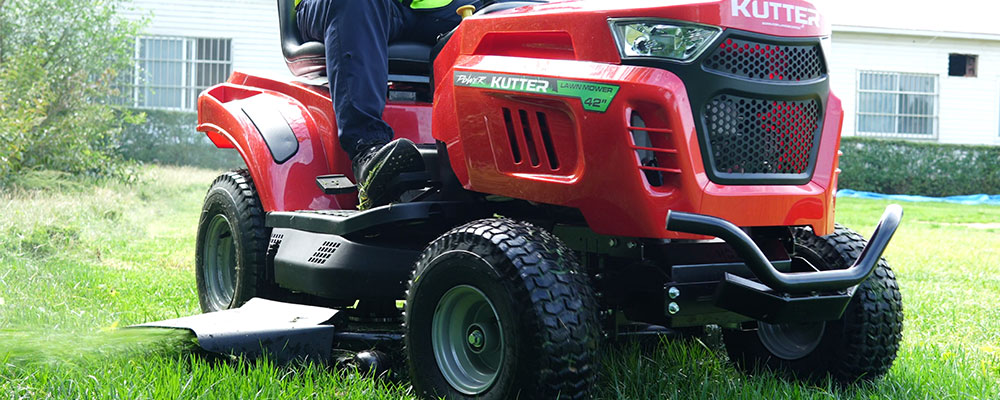
How Does Wet Grass Change the Comparison?
Wet clippings are heavier, they clump, and they do not travel as far. That punishes a discharge path that relies on throwing material clear.
Side discharge in the wet still clears material quickly because the stream leaves the deck under power, but the clumps land in a heavier line, and a blocked chute is a stop-work item. Operators working in wet conditions need to clear the chute more often.
Rear discharge in the wet does not depend on throwing distance, so it keeps working where a side chute might pack. The trade-off is that material dropped behind can mat under the wheels if the growth is long, which is why rear discharge works best with a disciplined cutting frequency.
For European buyers this is not a marginal point. A long wet spring is the normal condition across much of the region, and it is the condition in which the two layouts behave most differently.
What Does Side Discharge Require from the Site?
Side discharge is the faster layout in heavy growth, and it asks more of the site in return.
Clear space on the discharge side. Thrown clippings, and anything the deck picks up, go sideways. Footpaths, parked cars, glasshouses and play areas on that side need managing.
Direction control. A deflector lets the operator aim the stream, but the operator has to use it. Set it as a habit, not as an afterthought.
Approach side. Trimming tight to a wall or a hedge on the discharge side is awkward, because the chute is between the machine and the obstacle.
A 42-inch side discharge lawn tractor suits the runs where those conditions hold: open ground, heavy growth, and space beside the machine. It is the wrong specification for a formal lawn bounded by a footpath on both sides.
What Does Rear Discharge Cost You in Throughput?
Rear discharge trades some throughput in heavy growth for tidiness and access.
The gains:
Both sides are usable, so boundary work does not have to be planned around a chute.
Clippings land under the machine, so there is no windrow to sweep off a path or a border.
Narrow access improves, because there is no side overhang to account for at gateways and between beds.
The costs:
Heavy growth takes more discipline. Long material dropped behind can mat; cutting frequency matters more.
Very wet, long growth is the hard case for any non-collecting layout, and the answer is usually more frequent cutting rather than a different machine.
A 34-inch rear discharge lawn tractor is a typical fit for a walled or hedged estate where access width and finish quality decide the purchase before speed does. Where the same tidy layout is needed across larger open lawns, a 42-inch rear discharge lawn tractor keeps the rear discharge geometry at a wider cut: the material still leaves behind the machine, and only the capacity per pass changes.
How Do the Two Layouts Work with Collection?
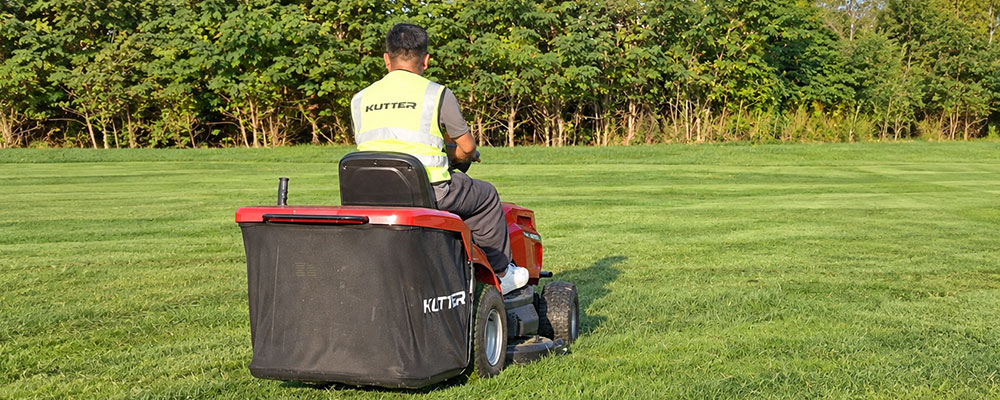
Rear discharge is the natural base for rear collection, because the material already leaves the deck at the back, where a collector sits. Side discharge decks can feed a collection system too, but the routing is different, and availability depends on the model rather than on the category.
Treat this as an architecture question, not a clipping-management question. Whether the site should collect, mulch or discharge at all depends on grass condition and season — that decision belongs to our bagging vs mulching guide.
Frequently Asked Questions
Which is better for wet grass, rear or side discharge?
Side discharge clears heavy wet growth faster, provided the chute is kept clear and there is space beside the machine. Rear discharge is more forgiving where material cannot be thrown clear, but it needs a more disciplined cutting frequency.
Can I trim close to a wall with a side discharge tractor?
On the discharge side, no — the chute sits between the machine and the obstacle. Rear discharge allows close approach on either side, which is why it suits walled gardens and hedged boundaries.
Is rear discharge slower?
In heavy, long growth, generally yes, because the material is dropped rather than thrown. On formal lawns cut on schedule, the difference largely disappears, and the tidier finish usually matters more.
Which layout is safer near footpaths?
Rear discharge, because clippings and any picked-up debris stay behind the machine rather than being thrown sideways. Where a side discharge machine is used near public areas, the deflector must be set correctly and the run planned.
Do both layouts work with a grass collector?
Rear discharge is the natural match, since material exits at the back. Side discharge collection depends on the specific model — check availability for the machine you are specifying rather than assuming it.
How should a European dealer stock the two layouts?
Stock by customer type. Estates, hotels and municipal formal lawns push towards rear discharge; contractors cutting large open areas in season push towards side discharge. Several customers need one of each.
Bottom Line
Rear discharge and side discharge are not better or worse — they are different geometries for different sites. Rear discharge wins on tidiness, access and collection. Side discharge wins on throughput in heavy growth and open ground.
Walk the site before you specify. Note the boundary type, the side space and the finish standard, then match the layout to those conditions rather than to a default preference.

Need Help Specifying the Right Deck?
Send us the site conditions you are specifying for — access widths, boundary types, cutting frequency and finish standard — and we will confirm which deck layout and cutting width fits, with the matching rear and side discharge models.
Contact Us
Related Products

LT-42S
hot selling index
CH7
hot selling index
LESU24-130
hot selling index

Lawn Aerator LA-26
hot selling index