
 Español
 العربية
 Francés
 Русский
 Português
 Deutsch
 Italiano
 Polski
 Malay
Malay
 日本語
日本語
 한국어
한국어
 Nederlands
 Indonesia
 български
 Українська
 فارسی
فارسی
 اوردو
اوردو
 тоҷикӣ
 বাংলা
বাংলা






Zero Turn Mower Dealer Inventory Mix: Stocking & Reorder

A zero turn mower dealer inventory mix should reflect who buys, what properties they maintain, when demand peaks and how quickly stock can be replenished. This guide provides an adjustable stocking framework. It does not promise margins, define franchise terms, allocate territory or replace a dealer's cash-flow model.
On This Page
Inventory should follow local demand
A zero turn mower dealer inventory mix should reflect who buys, what properties they maintain, when demand peaks and how quickly stock can be replenished. This guide provides an adjustable stocking framework. It does not promise margins, define franchise terms, allocate territory or replace a dealer's cash-flow model.
Segment customers
Separate large-property homeowners, landscape contractors, institutions, municipalities and specialist users. Record their common acreage, access limits, desired deck sizes, annual hours, financing sensitivity, service expectations and purchase season. Dealer sales history is stronger evidence than a national average when the local market differs.
Give each deck size a role
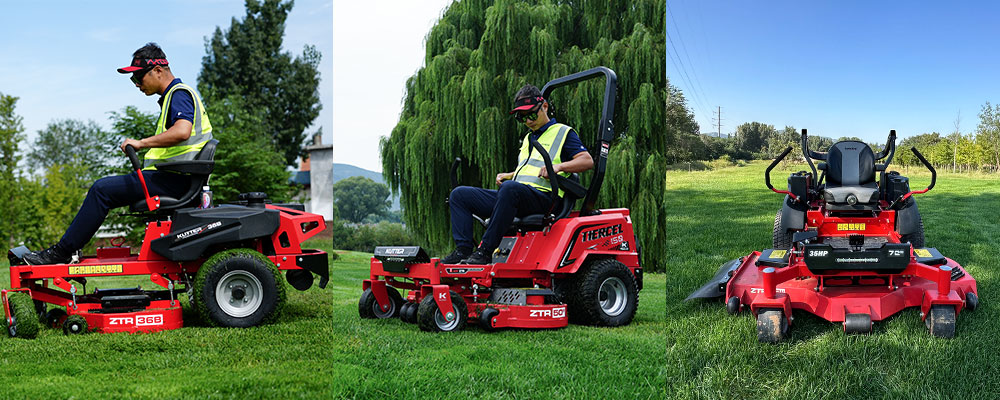
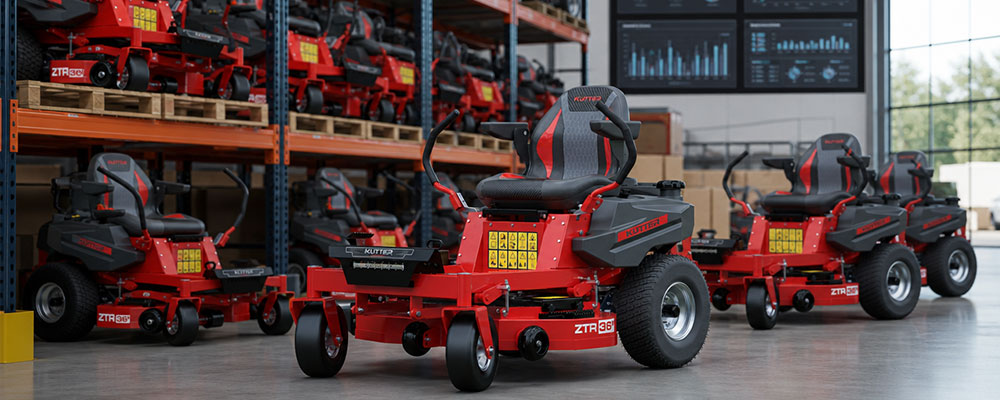
Define narrow-access, general-purpose and open-acreage roles before choosing SKU counts. A balanced mix may include compact or mid-size machines for gated work, core commercial widths for contractors, and a limited number of wide-deck units for campuses or large estates. Avoid equal quantities across sizes unless demand data supports it.
Separate display, demo and sale stock
A showroom unit communicates range, while a demo unit generates field evidence and leads. Decide whether the demo can later be retailed, how hours and condition will be disclosed, and who maintains it. Protect at least one sale-ready unit in high-demand roles during peak periods rather than allowing demonstrations to consume all available stock.
Plan for seasonality
Map inquiry, quotation, delivery and mowing-season peaks by month. Order lead time means inventory decisions may precede retail demand by weeks or months. Track weather, contract awards and preseason promotions, but use scenarios instead of one forecast. A warm or wet season can shift both timing and deck-size demand.
Set reorder triggers
For each SKU role, record average weekly sales in season, confirmed orders, available units, inbound units, lead time and safety stock. A simple trigger is expected demand during lead time plus safety stock, adjusted for cancellations and demo availability. Keep assumptions visible and review them weekly during peak season.
Control aging and concentration risk
Report inventory age by unit, cash tied up by deck-size role and the share of stock in the largest SKU. Establish actions for slow movers: targeted demonstrations, cross-branch transfer, bundled service, updated merchandising or revised future orders. Discounting should be evaluated with margin and brand impact, not used automatically.
Connect stock to downstream fleets
Contractor replacement schedules and route changes provide early demand signals. The commercial mower fleet planning framework explains how customers choose deck roles. Dealers can translate those patterns into stocking scenarios without turning this page into a contractor operations guide.

Monthly planning table
Use this table to plan and review inventory by segment, deck role and SKU. Add conservative, expected, and upside cases when source data is thin. Review weekly during peak season.
| Segment | Deck Role | SKU | Sale Units | Demo | ATP | Inbound | Lead Time (wks) | Peak Forecast | Safety Stock | Reorder Pt | Age (days) | Owner | Next Review |
|---|---|---|---|---|---|---|---|---|---|---|---|---|---|
| Contractor | Core 54–60" | 1 | |||||||||||
| Large property | Wide 72" | 0 | |||||||||||
| Residential | Compact 42–48" | 0 | |||||||||||
| Municipal | Multi-deck | 0 |
Next step
Review the commercial zero turn mowers range, test the stocking plan in the dealer profit and ROI calculator, and contact KUTTER dealer team for current availability and program information. Final quantities should be approved against local sales history, cash capacity and confirmed lead times.
Dealer inventory benefits
Match local demand
Segment-based stocking ensures the right deck sizes are available for your specific customer mix, not a national average.
Protect sale-ready stock
Separating demo and sale inventory ensures demonstrations never leave your best-selling SKUs out of stock during peak season.
Reduce cash lockup
Aging and concentration reporting helps you act on slow movers before they tie up capital through winter.
Data-driven reordering
Reorder triggers based on lead time and safety stock replace gut-feel ordering with measurable inventory signals.
Frequently Asked Questions
How many mower SKUs should a dealer stock?
Enough to cover the three main local buyer segments — residential, contractor, and large-property — plus one demo unit for the primary revenue SKU. A dealership in a suburban market might stock 42", 54", and one 72" demo; a rural dealer might flip that to 48", 60", and 72". The right number follows your sales history, not a national average.
Should I keep a demo unit separate from sale inventory?
Yes. Dedicate one unit per key SKU to demonstrations. Track hours, disclose prior demo use on sale, and plan for a discount that reflects the accumulated hours and your local market. A demo unit that generates three fleet orders is a profit center, not a cost.
How do I calculate a reorder point for zero turn mowers?
Formula: Reorder point = (average weekly sales × lead time in weeks) + safety stock. Example: If you sell 2 units/week of a 54" model, lead time is 6 weeks, and you keep 3 units as safety stock: (2 × 6) + 3 = 15. When available inventory drops to 15, reorder. Adjust weekly during peak season.
When should I discount aging inventory?
Run a targeted demo event before reaching for the discount. If that fails to generate orders, mark it down and fold the lesson into next season's order. Moving a slow-mover mid-season often recovers cash faster than holding through winter at full price.
Where can I find KUTTER's current dealer program details?
For current program terms, availability, and onboarding requirements, reach out to the dealer team directly. Program details change — never rely on a cached web page.
Ready to Optimize Your Inventory Mix?
Use the monthly planning table to align stock with local demand, then explore KUTTER commercial zero turn mowers and the dealer ROI calculator.

Want Dealer Program Details?
Our dealer team can walk you through current availability, lead times, and program terms for your market.
Contact Dealer Team

Related Products
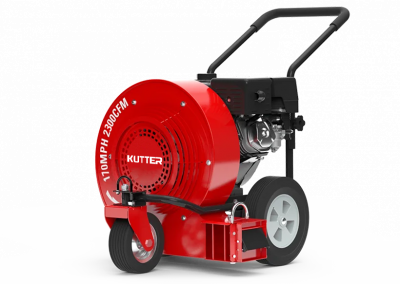
LB1
hot selling index

LT-42R
hot selling index
LESU24-130
hot selling index
