
 Español
 العربية
 Francés
 Русский
 Português
 Deutsch
 Italiano
 Polski
 Malay
 日本語
 한국어
 Nederlands
 Indonesia
 български
 Українська
 فارسی
 اوردو
 тоҷикӣ
 বাংলা






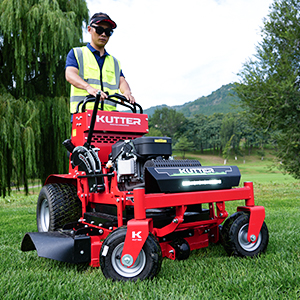
Commercial Stand-On Mower Maintenance Checklist: Daily, 50-Hour and Seasonal Task
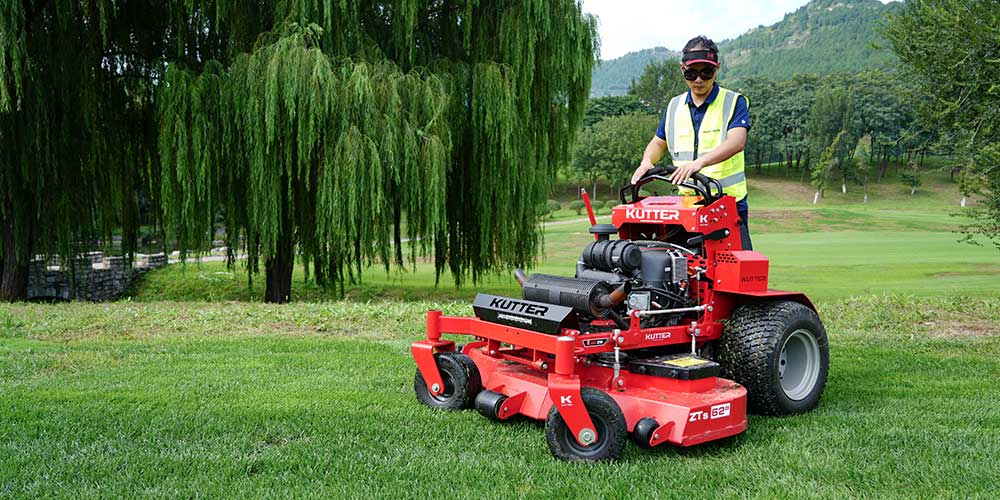
A stand-on mower earns money only when it is cutting. The difference between a fleet of stand-ons that runs all season and one that spends July in the shop is usually not luck — it is maintenance discipline. This commercial stand-on mower maintenance checklist organizes the work into three practical buckets: every-day inspections, 50-hour service intervals, and seasonal tasks. It tells you what to check, what to clean, what to lubricate and what to replace, and where the intervals can differ by model.
Important: This checklist is a planning guide, not a substitute for your machine's operator manual. Torque values, fluid grades, capacities, filter part numbers and exact service intervals are model-specific. Always follow the manufacturer's manual for your exact model and year, and verify with a qualified technician when a task affects safety.
On This Page
Daily Stand-On Mower Inspection Checklist
The daily walk-around takes five to ten minutes and catches the problems that turn into downtime. Do it before the first start, and repeat the safety-critical checks when the machine has been transported to a site.
| Check | What to look for | Action if needed |
|---|---|---|
| Engine oil level | Between min/max marks, engine cold | Top up to spec grade only |
| Hydraulic oil level | Between marks, machine level | Top up; note leaks |
| Fuel system | Fuel level, no visible leaks | Refuel; trace and fix leaks |
| Air filter indicator (if fitted) | Indicator not in red | Clean or replace per manual |
| Cutting blades | Damage, dullness, missing blades | Sharpen, replace, tighten |
| Blade bolts | Torque intact, no looseness | Retorque to spec |
| Spindle & deck | Debris packed, bearings noisy | Clean deck underside; check bearings |
| Belts | Cracks, glazing, wear | Replace when damaged |
| Tires & wheels | Pressure, damage, lug bolts | Inflate to spec; replace/retorque |
| Discharge chute | Intact, guard functional | Repair or replace |
| Safety systems | Operator-presence, parking brake, switches | Test; repair before use |
| Steering & controls | Free movement, no binding | Lubricate or adjust |
| Platform & mounts | Cracks, loose fasteners, worn springs | Repair or replace |
| Fluids (leaks) | Oil/hydraulic stains under machine | Identify source and fix |
| ROPS/operator area | Clean, no loose items | Secure items; clean platform |
Never run a machine with a failed safety interlock or brake defect, even "just to finish the route." These are not maintenance items — they are go/no-go items.
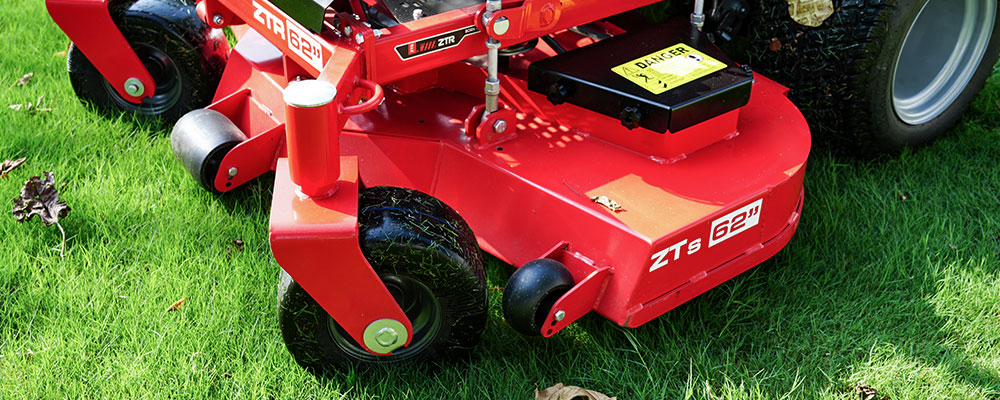
50-Hour Service Checklist
The 50-hour mark is the first service interval on many commercial stand-ons, and it repeats throughout the season. If your crew runs ten hours a day, that means roughly one 50-hour service every week.
| Task | Frequency basis | Notes |
|---|---|---|
| Change engine oil and filter | Per manual (often 50–100 h) | Use specified grade; note break-in oil change |
| Clean/replace air filter | Per manual | Dusty sites: inspect more often |
| Check/clean fuel filter & lines | Per manual | Replace per interval |
| Inspect hydraulic hoses and fittings | Per manual | Look for chafing, bulges, leaks |
| Check hydraulic filter (if serviced) | Per manual | Replace per interval |
| Lubricate grease points | Per manual | Zero-turn and stand-on pivots |
| Clean deck underside and spindle area | Every service | Prevents buildup and balance issues |
| Inspect drive and deck belts | Every service | Replace at first signs of wear |
| Check blade balance and sharpness | Every service | Imbalanced blades vibrate |
| Inspect wheel/tire condition and pressure | Every service | Correct pressure affects steering feel |
| Check battery connections | Every service | Clean and tighten terminals |
| Torque-check wheel lugs | Every service | Retorque per manual |
The exact interval for oil and filter changes varies by engine and model — some engines specify 50 hours, some 100 hours, and the first service after break-in is often earlier. Check the manual. If your crew needs the step-by-step procedure for checking engine oil on a commercial mower, our illustrated oil-check guide walks through the dipstick, level and top-up sequence. The list above is the work package; the manual is the schedule authority.

Seasonal Stand-On Mower Maintenance Tasks
Seasons are where fleets either extend machine life or shorten it. Schedule these at the start of the season (pre-season) and before storage (end-of-season).
Pre-Season (start of the cutting window)
End-of-Season (storage preparation)
| Task | Purpose |
|---|---|
| Stabilize fuel or drain per manual | Prevent stale-fuel problems |
| Run engine to distribute stabilized fuel | Protect fuel system |
| Change engine oil and filter | Remove acids before storage |
| Clean deck thoroughly, apply rust protection | Prevent corrosion |
| Remove/clean battery, keep charged | Prevent battery failure |
| Lubricate all grease points | Protect pivots during storage |
| Block up or relieve wheel load if stored long-term | Protect tires |
| Cover machine, store dry and protected | Reduce weathering |
The 5-Minute End-of-Day Routine
Between the daily check and the 50-hour service, the single most valuable habit is the end-of-day cleanup:
Park on a level surface, shut down, and wait for all moving parts to stop.
Blow or scrape grass from the deck underside, spindles and pulleys.
Check the blades for damage while the deck is accessible.
Wipe the hydraulic lines and look for leaks in the engine bay.
Note anything unusual on a service log so it is not forgotten by the next crew.
Clipping buildup under the deck is not cosmetic. Packed grass unbalances the blade assembly, restricts airflow, dulls cutting efficiency and accelerates spindle wear. A clean deck is a maintenance shortcut, not a luxury.
Maintenance vs. Repair: Know the Boundary
| Task type | Examples | Who |
|---|---|---|
| Operator-level | Daily checks, cleaning, blade swap, greasing | Trained operator |
| Routine service | Oil/filter change, belt replacement | Qualified technician or trained operator |
| Safety-critical | Brake, steering, hydraulic, electrical faults | Manufacturer-qualified technician |
| Engine major | Overhaul, valve adjustments beyond service items | Authorized engine service |
If you are unsure whether a task is operator-level or technician-level, stop and ask. The operator manual and the machine's service documentation draw this boundary for your specific model.
Frequently Asked Questions
How often should I service a commercial stand-on mower?
Every day for inspections, roughly every 50 operating hours for the core service package (oil, filters, lubrication, blade and belt checks), and at least twice per season for deep seasonal work (pre-season and end-of-season). Exact oil-change intervals vary by engine and model — the manual is the authority.
What is the most important daily check on a stand-on mower?
The engine oil level and the safety systems. Oil protects the engine, and the operator-presence and brake systems protect the operator — neither has a workaround. After those, the blade condition and deck cleanliness have the biggest effect on cut quality and machine health.
Do I need a different maintenance schedule for a stand-on vs a zero-turn?
The task list is broadly similar, but stand-ons run higher ground speeds and carry the operator's weight on a platform, so pay attention to platform mounts, steering feel and hydraulic system condition. Exact intervals, torque values and fluid specs come from the manual for your model — do not carry numbers from one machine to another.
Why does my stand-on vibrate after blade sharpening?
Most likely an imbalanced blade. After sharpening, blades should be checked for balance so they do not shake the spindle, belt and platform. Also inspect the spindle and pulleys for wear or debris — vibration is not always the blades.
Can I store my stand-on over winter with fuel in the tank?
Not recommended. Follow the manual's storage procedure: treat or drain fuel as specified, run the engine to distribute treated fuel, change the oil and filter, clean the deck, and remove or maintain the battery. Stored incorrectly, stale fuel and absorbed moisture cause starting problems next spring.
Where can I find the service parts and intervals for my model?
Start with the operator manual and service documentation for your exact model — they define intervals, fluids and torque values. For compatible service parts and accessories, review the stand-on mower range and the mower parts and accessories documentation, and confirm part numbers with your dealer before ordering.
Is there a printed checklist my crew can use in the field?
Yes — this guide is designed to be turned into a crew-facing checklist. Laminate the daily table for the shop wall and keep the 50-hour and seasonal lists with the service log. If your team needs a starting point for slope and site safety alongside the maintenance routine, the stand-on mower slope safety guide covers the operator-side checks that belong on the same pre-shift routine. For service planning help, contact the KUTTER support team.
Bottom Line
Maintenance discipline is what separates profitable fleets from expensive summers. The daily check, the 50-hour service and the seasonal deep-dive each catch a different class of problem. Build the habit, keep the log, and follow the manual — your stand-on mower is a revenue tool only when it is sharp, clean and safe.

Need Service Parts or Maintenance Guidance?
We will send you the correct parts list, interval schedule and service documentation for your model — no obligation.
Contact Us
Related Products
CS500 Pro
hot selling index

CM25
hot selling index
FLA 1220
hot selling index
CH7
hot selling index