
 Español
 العربية
 Francés
 Русский
 Português
 Deutsch
 Italiano
 Polski
 Malay
 日本語
 한국어
 Nederlands
 Indonesia
 български
 Українська
 فارسی
 اوردو
 тоҷикӣ
 বাংলা






Stand-On Mower Slope Safety: Operating Limits, Traction and Crew Procedures
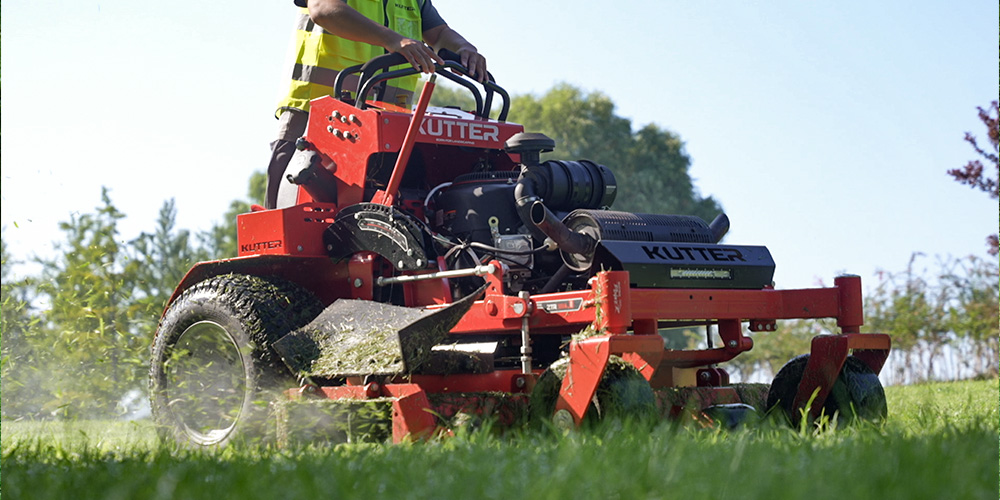
Slopes are where stand-on mowers earn their reputation — and where they demand the most respect. A stand-on mower carries the operator on a raised platform, which shifts the center of gravity compared to a seated machine, and its behavior on a slope depends on traction, tire contact, weight distribution and the operator's technique. This stand-on mower slope safety guide covers operating limits, traction, cross-slope and up/downhill technique, wet-grass risk, crew training and the conditions where the right decision is to stop.
Important: This guide is a framework for planning and training. It is not a substitute for the operator manual of your specific machine, and it does not state a universal maximum slope angle that applies to all models. Slope limits are machine-specific — read the manual for your model, follow the manufacturer's stated limits, and comply with any site, regional or workplace safety rules that apply to your operation.
On This Page
Step 1: Know Your Machine's Operating Limits
The first safety step happens before anyone reaches the property: the crew must know the actual slope limits of the machine they are running.
| Source of truth | What it provides |
|---|---|
| Operator manual | Stated slope limits, weight limits, warning labels |
| Machine decals | Slope warning, load limits, operating cautions |
| Dealer/manufacturer documentation | Clarifications for your model and options |
| Site survey | Actual grade measurements, not estimates |
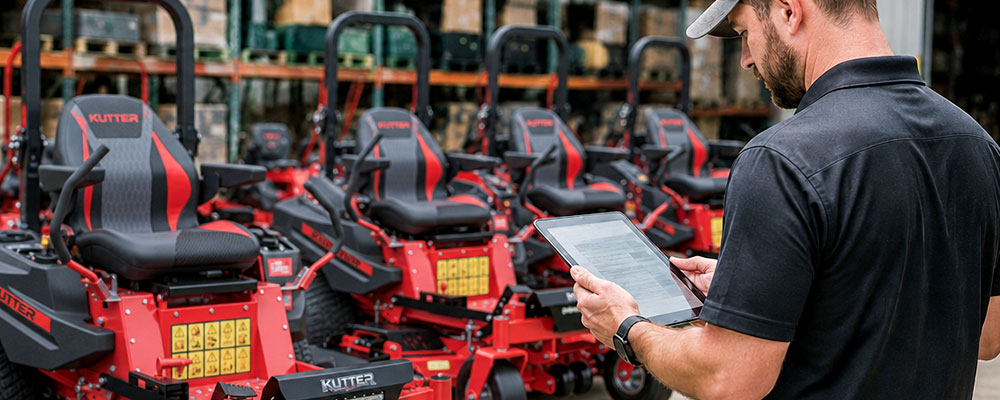
Never substitute rules from another machine, another brand, or another article — including this one — for the manual of the specific model you operate. A stand-on mower is not a zero-turn mower, and the operating rules for one platform do not transfer to the other.
Step 2: Assess the Slope Before Mowing
A pre-mow assessment answers three questions: how steep is the slope, what is the surface condition, and what obstacles are present?
| Assessment item | What to check |
|---|---|
| Grade steepness | Measure with a digital inclinometer or app; do not eyeball |
| Surface condition | Wet grass, dew, loose soil, moss, leaf cover |
| Traction surface | Tire type appropriate for the terrain |
| Obstacles | Bumps, holes, rocks, roots, sprinkler heads |
| Edge conditions | Drop-offs, retaining walls, drainage ditches |
| Weather | Rain, recent rain, forecast within the job window |
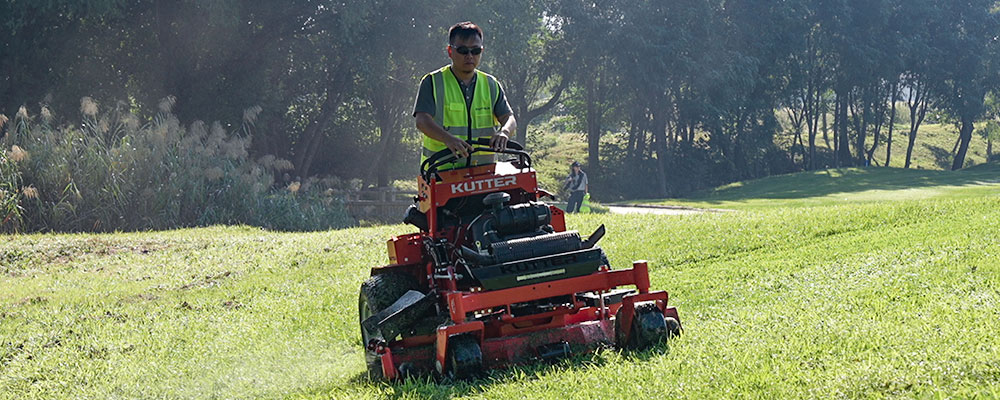
Slope perception is unreliable. A slope that looks "fine" can exceed a machine's limit, and a slope that looks intimidating can be within limits. Measure the grade and compare it to the manual's number — measurement replaces guesswork.
Step 3: Traction and Weight Distribution
Traction on a stand-on mower is affected by weight, tire contact and surface. Key points:
Tire choice matters. Turf tires, bar tires and all-terrain tires have different grip profiles on different surfaces. Match the tire to the terrain the machine actually works.
Weight distribution changes with attachments. A bagger or catcher shifts weight to the rear; accessories can change slope behavior even when the slope angle stays the same.
Hydrostatic drive and traction. Standing weight and engine placement influence how much weight sits over the drive wheels. Check the manual's guidance on slope operation with your configuration.
| Condition | Traction risk | Response |
|---|---|---|
| Wet grass | Low grip, wheel spin | Wait for dry conditions |
| Heavy dew (early morning) | Slippery start of shift | Delay until dew burns off |
| Loose soil or sand | Slide risk | Choose a different line or surface |
| Leaf cover on slope | Hides surface, reduces grip | Clear or avoid |
| Frost or ice | Extreme risk | Do not operate |
Step 4: Cross-Slope vs. Up/Downhill Operation
Slope technique differs by direction:
Mowing across the slope (cross-slope) is where rollover risk is highest on any mower, including stand-ons. The machine's center of gravity, tire grip and the slope angle combine to determine whether the machine stays stable. If the manual restricts cross-slope operation on certain grades, follow it exactly.
Mowing up and down the slope changes the load on the drive system and the risk of the machine sliding. Going down a steep, slippery slope is often more dangerous than going up, because the machine can lose traction and slide.
Transitions — the change where a slope meets level ground — are where tip-over or pitch-over can occur, especially with a raised platform and a full hopper.
The manufacturer's manual defines the recommended direction and limits for your model. Where the manual is silent, apply the most conservative interpretation and confirm with the manufacturer before treating a slope as workable.
Step 5: Wet-Grass and Weather Rules
Wet grass is the most common preventable slope accident cause on commercial routes.
| Wet-condition rule | Why |
|---|---|
| Postpone slope work until grass dries | Grip increases dramatically when dry |
| Skip early-morning dew cuts on slopes | First cuts of the day are the slippiest |
| Re-evaluate after rain during the shift | Weather changes faster than routes |
| Check the forecast for the job window | Plan slope-heavy accounts for dry windows |
| Stop slope work during any rain | Traction changes within minutes |
If a contract insists on slope mowing in wet conditions, the correct commercial response is to explain the safety limit and offer an alternative — a later visit, a different machine, or a different mowing direction — rather than to "make it work."
Step 6: Crew Training and Stop Conditions
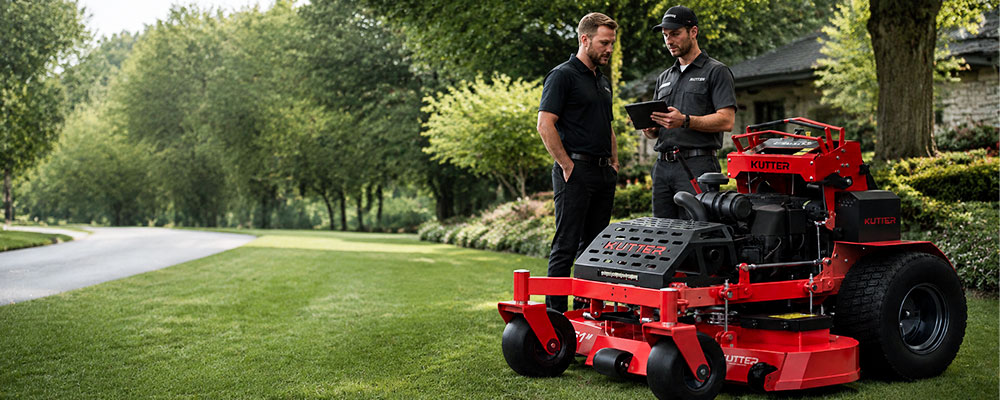
Slope safety is a crew procedure, not a one-time tip. Train every operator on the machine's limits, the assessment routine and the stop conditions, and document the training.
| Training element | Content |
|---|---|
| Manual review | Slope limits, decals, warnings for the specific model |
| Assessment practice | Using an inclinometer on real sites |
| Technique drills | Cross-slope, up/downhill, transitions, obstacles |
| Stop conditions | The checklist below — anything on it means stop |
| Incident reporting | Report near-misses and events without blame |
Stop mowing immediately when any of these is true:
There is no contract, schedule or production target that overrides a stop condition. A stopped crew member is a safe crew member.
Quick-Reference: Stand-On Slope Safety Checklist
| # | Item | Status |
|---|---|---|
| 1 | Manual slope limit known for this model | ☐ |
| 2 | Grade measured, not estimated | ☐ |
| 3 | Surface dry and traction confirmed | ☐ |
| 4 | Tires appropriate for terrain | ☐ |
| 5 | Attachments within manual's weight/balance guidance | ☐ |
| 6 | Obstacles and edges identified | ☐ |
| 7 | Weather checked for the job window | ☐ |
| 8 | Operator trained and familiar with the machine | ☐ |
| 9 | Stop conditions understood and empowered | ☐ |
If you also operate zero-turn mowers on slopes, our zero-turn mower slope safety checklist covers the seated-platform counterpart. The two guides use different machines and different operating rules — do not mix them.
Frequently Asked Questions
What is the maximum slope angle for a stand-on mower?
There is no single answer that applies to all stand-on mowers. Slope limits are model-specific and stated in each machine's operator manual. Measure the actual grade with an inclinometer and compare it to the manual's number for your exact model and configuration. If the manual does not state a limit, treat the slope as unverified and confirm with the manufacturer.
Is it safer to mow slopes up-and-down or across with a stand-on mower?
It depends on the machine's stated limits and the conditions. Cross-slope operation carries the highest rollover risk and is restricted on many machines beyond certain grades. Up-and-down operation changes drive load and adds sliding risk on steep, slippery surfaces. Follow the manual's direction for your model; where it is silent, use the most conservative choice and confirm with the manufacturer.
Why is my stand-on mower losing traction on a slope?
Likely causes are wet or dewy grass, worn or inappropriate tires, incorrect tire pressure, weight shifted by an attachment, or a slope exceeding the machine's traction capability. Stop, evaluate the surface and the configuration, and do not continue until the cause is understood and corrected.
Can I use a zero-turn slope checklist for a stand-on mower?
No. The two platforms have different centers of gravity, weight distribution and operating rules. Use the stand-on checklist in this guide for stand-on machines and the zero-turn checklist for zero turns. Mixing operating rules between platforms is a safety error.
What should I do if a client insists on mowing a slope in wet weather?
Explain the safety limit professionally and offer alternatives: reschedule for a dry window, use a different machine, or adjust the mowing line. Never operate beyond the machine's stated limits to satisfy a schedule. Document the refusal and the alternative offered — safety decisions are part of responsible commercial operations.
Where can I find the slope limits for my specific stand-on model?
Start with the operator manual and the warning decals on the machine. For clarification on a specific model, contact the manufacturer or dealer with your model and configuration details. Review the stand-on mower range and ask your KUTTER support contact for the documentation relevant to your machine.
Bottom Line
Slope safety on stand-on mowers is not about being cautious — it is about being systematic. Know the manual, measure the grade, assess the surface, train the crew and empower every operator to stop. The safe crew is the crew that finishes the season.

Need Slope Safety Training for Your Crew?
We will send you machine-specific slope limits, assessment tools and crew training materials — no obligation.
Contact Us
Related Products

ZTS-61C
hot selling index

CM25
hot selling index