
 Español
 العربية
 Francés
 Русский
 Português
 Deutsch
 Italiano
 Polski
 Malay
Malay
 日本語
日本語
 한국어
한국어
 Nederlands
 Indonesia
 български
 Українська
 فارسی
فارسی
 اوردو
اوردو
 тоҷикӣ
 বাংলা
বাংলা






Lawn Tractor Total Cost of Ownership for Fleet Buyers
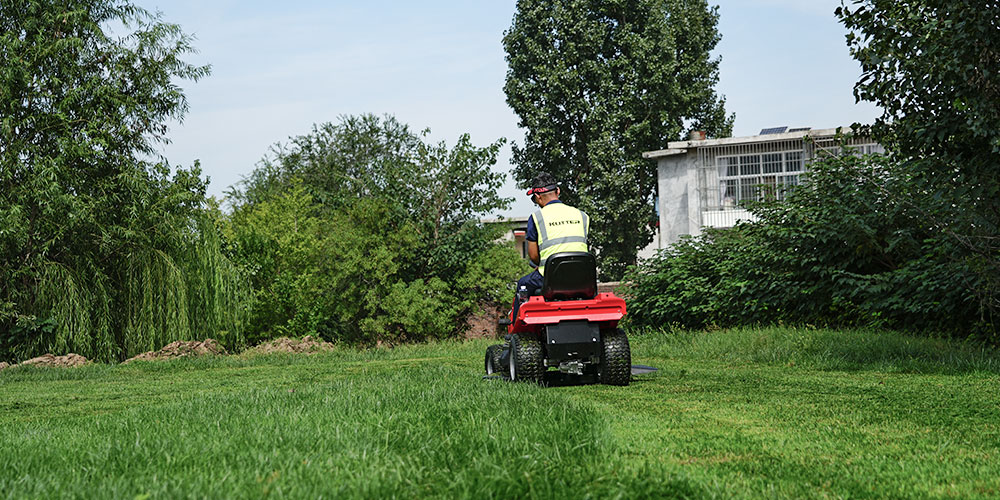
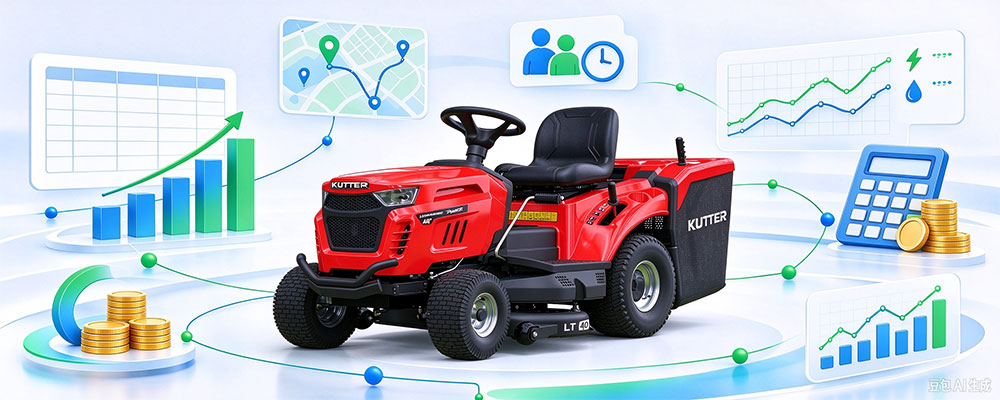
Quick answer: Total cost of ownership is purchase price plus financing and logistics, energy, planned maintenance, repair and downtime, labour difference and attachments, minus residual value. Compare machines over the same ownership period and the same annual hours, and convert the result to a cost per operating hour before deciding.
This framework is for fleet buyers, dealers building a customer business case, and estate managers justifying a replacement programme. It will help you build one comparison sheet that survives scrutiny from a finance department. The numbers that go into it are yours; this article supplies the structure.
On This Page
What Is the TCO Formula?
Copy this into a spreadsheet, one column per machine, over the same ownership period.
TCO = Purchase price
    + Financing and logistics
    + Energy (fuel or electricity)
    + Planned maintenance
    + Repair and downtime
    + Labour difference
    + Attachments
    − Residual value
Then normalise it, because a machine used twice as many hours is not twice as expensive to own for the same reason:
Cost per operating hour = TCO ÷ total operating hours over the period
Cost per hour is the figure to compare. Purchase price alone favours the cheapest machine almost every time, and purchase price is usually the smallest line in a five-year comparison.
How Do You Fill In a Three- or Five-Year Comparison?
| Cost line | What to enter | Where the data comes from |
|---|---|---|
| Purchase price | Delivered price, per machine | Your quotation |
| Financing and logistics | Interest, freight, import and handling | Your finance and shipping terms |
| Energy | Annual fuel or electricity cost | Your consumption records |
| Planned maintenance | Parts, fluids and service labour per year | Manuals plus your service rates |
| Repair and downtime | Unscheduled repairs plus cover cost | Your own breakdown history |
| Labour difference | Operator hours saved or added per year | Your route timings |
| Attachments | Collection, seasonal and towed equipment | Your specification |
| Residual value | Estimated value at replacement | Your own market, not a published figure |
The illustration below uses hypothetical placeholder figures to show the arithmetic only. They are not KUTTER prices, not a quotation, and not observed resale values. Replace every number with your own.
| Cost line | 3-year illustration | 5-year illustration |
|---|---|---|
| Purchase price | €6,000 | €6,000 |
| Financing and logistics | €450 | €700 |
| Energy | €1,200 | €2,000 |
| Planned maintenance | €900 | €1,600 |
| Repair and downtime | €600 | €1,300 |
| Labour difference | −€1,500 | −€2,500 |
| Attachments | €800 | €800 |
| Residual value | −€2,000 | −€1,200 |
| TCO | €6,450 | €8,700 |
Two things are visible immediately. Labour difference carries a negative sign because a faster machine can reduce operator hours, and residual value falls as the machine ages — which is why a three-year and a five-year comparison can rank two machines differently.
Build the sheet with your own routes, wages and energy prices, then compare the lawn tractor range machine by machine on the same line items.
Which Cost Lines Do Buyers Usually Miss?
The lines that get forgotten are the ones that decide the comparison.
Downtime cover. If a machine in service leaves a zone uncut, the cost is either an unplanned hire, overtime, or a missed service level. Price that, or the calculation flatters the least reliable option.
Labour difference. Two machines with the same purchase price can differ by hours per week. Over three years those hours usually exceed the price gap.
Energy. Fuel use is not proportional to purchase price, and electricity, where relevant, has its own tariff structure.
Attachments and their storage. Attachments cost money, space and maintenance time.
Disposal or resale handling. Getting value out of an old machine takes effort; count it.
How Do Labour Hours Enter the Calculation?
Labour is usually the largest single line, and it is the one most often guessed.
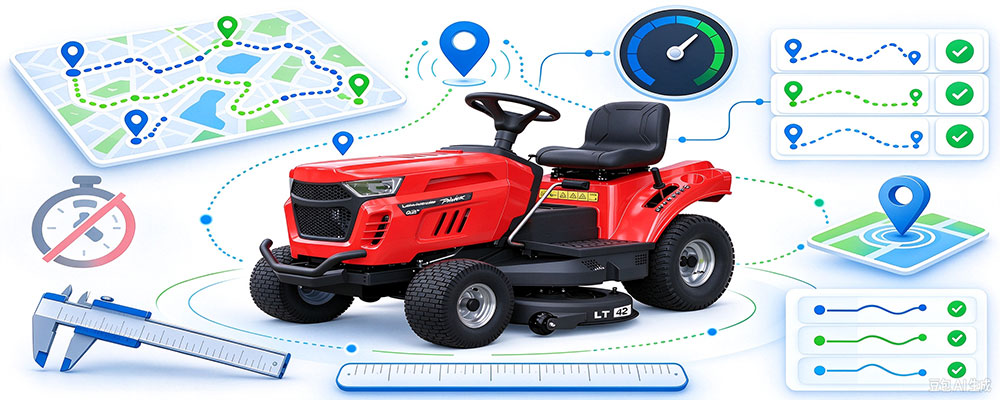
The honest method is to measure rather than estimate. Time one representative route on each machine over a full working visit, including emptying stops, turning, trimming and access time — not just the open running. Multiply the difference by the number of visits per season and your loaded hourly cost.
Two cautions:
Compare like with like. A machine that is faster on open ground may lose that advantage at narrow gateways or on a collection route.
Include the learning period. A platform with a longer learning curve costs operator hours in its first season, which a one-day demonstration will not show.
Where the comparison is between platforms rather than models, start from the task mix: our lawn tractor vs zero-turn mower comparison sets out which platform does which property task.
How Do Energy and Fuel Enter It?
Use your own records rather than a published consumption figure. A machine's fuel use depends on ground, growth, operator habits and whether it is collecting, so a laboratory figure will not match your routes.
Practical approach:
Record fuel or energy use for one full season per machine type.
Separate collection work from open mowing — the load differs.
Apply your own energy price, and note it in the sheet so the comparison can be updated when prices move.
Where a fleet mixes engine types or fuel types, run the energy line per machine rather than as a fleet average.
How Do Maintenance, Downtime and Cover Enter It?
Split maintenance into planned and unplanned, because they behave differently.
Planned maintenance is predictable: service parts, fluids and labour, dated from the machine manual and the engine manual. Ask for the service schedule for the specific model and engine before you commit. Our lawn tractor maintenance schedule sets out the three-level structure the work falls into.
Unplanned repair and downtime is not predictable, and it should be entered as your own historical figure rather than assumed away. If you have no history, start with a conservative allowance and update the sheet after the first season.
Cover is the cost of keeping service levels when a machine is out. For a single-machine site it may be a hire; for a large fleet it may be one spare machine across several identical units.
Where Do Attachments and Multi-Task Capability Change the Answer?
An attachment changes the calculation in two ways: it adds a purchase line, and it may remove the need for another machine or another contractor visit.
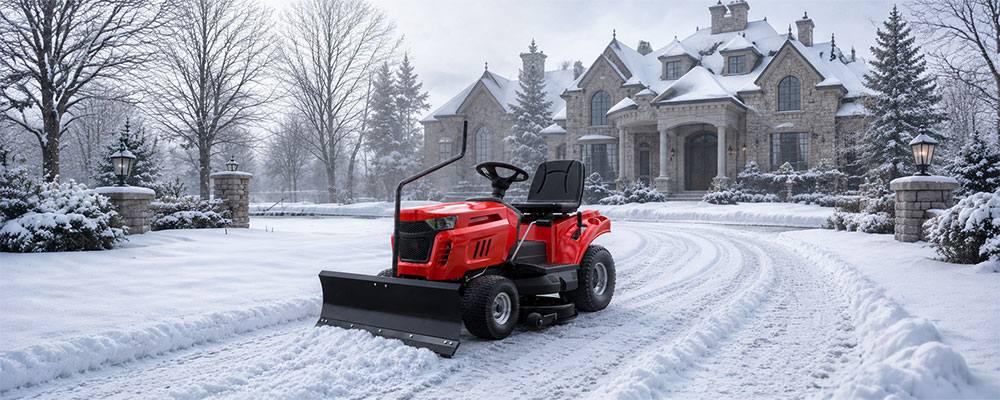
Enter attachments on their own line and ask what they displace. A machine that also sweeps, tows or clears snow covers more of the year, which spreads its fixed costs over more working hours and lowers cost per hour even when the purchase price is higher.
A grass collector is one such line and only one line here. Whether the collector itself pays back is a separate analysis with its own variables — see our lawn tractor grass collector cost guide.
How Should You Treat Residual Value?
Residual value is the least certain line in the sheet, and the one that most often turns a close comparison. Treat it conservatively.
Use your own observed resale or trade-in experience in your market.
Do not use a manufacturer's or a dealer's published figure as a forecast.
Note the condition assumptions — hours, service history, tyres, deck condition — because they are what the figure rests on.
Shorten the ownership period if your replacement policy is driven by service level rather than by machine condition.
If the comparison reverses when residual value changes, say so in the recommendation. A decision that depends on an uncertain resale figure should be presented as a decision that depends on an uncertain resale figure.
Re-run the sheet whenever an input moves, and re-test the three that move most often: energy price, annual operating hours and residual value. If the ranking of two machines flips when one of them changes, the decision rests on that input. Present it that way rather than as a fixed recommendation — a finance reviewer will ask which assumption the answer depends on, and the sheet should already have the answer.
Frequently Asked Questions
What is included in lawn tractor total cost of ownership?
Purchase price, financing and logistics, energy, planned maintenance, repair and downtime, labour difference and attachments, less residual value. Compare over the same period and the same annual hours.
Should I compare three years or five?
Match your replacement policy. Three and five years can rank machines differently because residual value falls while maintenance rises — run both if your policy is uncertain.
How do I put a number on downtime?
Use your own history: extra hire, overtime, or the cost of a missed service level. If you have no history, use a conservative allowance and revise it after the first season.
Are the example figures in this article real prices?
No. They are hypothetical placeholders showing the arithmetic only. They are not KUTTER prices, not a quotation, and not observed resale values. Insert your own figures.
Why compare cost per hour rather than total cost?
Because machines are used differently. Cost per operating hour normalises for utilisation, so a machine that costs more but works more hours can be the cheaper asset.
Does a cheaper tractor always win on TCO?
No. A lower purchase price is often outweighed by labour hours, downtime and a weaker residual position. Run the full sheet before deciding.
Bottom Line
Total cost of ownership is not a single number — it is a framework. Build the sheet with your own routes, wages, energy prices and downtime history, then compare machines on cost per operating hour over the same ownership period.
The numbers in this article are placeholders. The structure is what you keep.

Need a TCO Input Sheet?
Send us your annual hours, routes, wage rate and energy price, and we will return a configuration and quotation input sheet so you can complete the TCO calculation with your own numbers.
Contact Us
Related Products

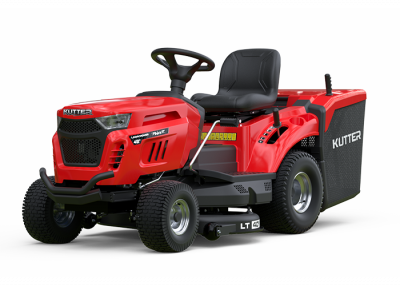
LT-40R
hot selling index
