
 Español
 العربية
 Francés
 Русский
 Português
 Deutsch
 Italiano
 Polski
 Malay
Malay
 日本語
日本語
 한국어
한국어
 Nederlands
 Indonesia
 български
 Українська
 فارسی
فارسی
 اوردو
اوردو
 тоҷикӣ
 বাংলা
বাংলা






Zero Turn Mower Slope Safety Checklist: Pre-Mow Guide
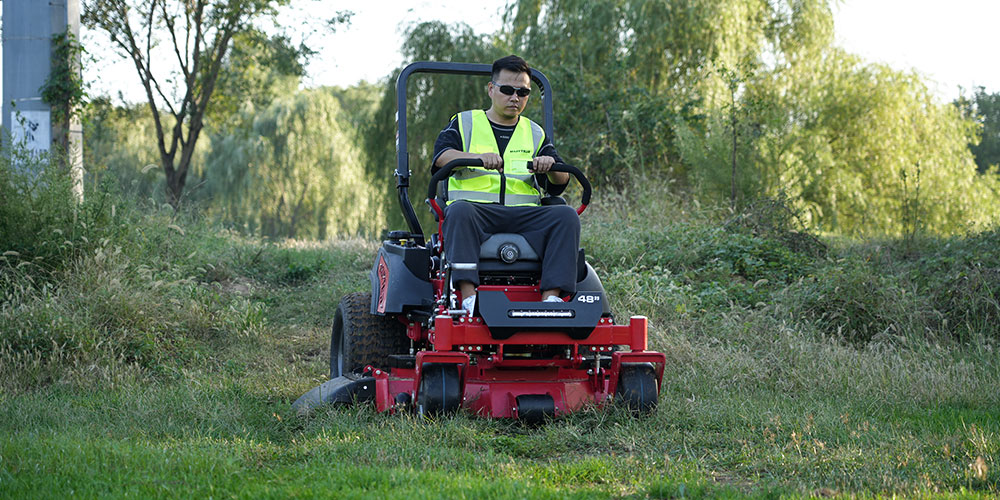
A zero turn mower on a slope is not the same machine it is on flat ground. The center of gravity shifts, traction changes by the second, and operator instinct — to accelerate out of a slide or counter-steer toward a drop-off — often makes things worse.
This zero turn mower slope safety checklist is a pre-mow framework, not a replacement for your operator manual. If the manufacturer says "do not mow slopes above X degrees," that is the final word. No checklist overrides it.
On This Page
Safety First — This is Not a Performance Test
A zero turn mower on a slope is not the same machine it is on flat ground. The center of gravity shifts, traction changes by the second, and operator instinct — to accelerate out of a slide or counter-steer toward a drop-off — often makes things worse.
This checklist is a pre-mow framework, not a replacement for your operator manual. If the manufacturer says "do not mow slopes above X degrees," that is the final word. No checklist overrides it.
1. Read the machine-specific limits
Identify the exact model, fitted attachments, tire specification and operator-manual version. Review slope warnings, prohibited directions of travel, rollover-protection instructions and ballast or attachment restrictions. Do not invent a "maximum safe angle" from online advice. The manufacturer's current manual and the actual site condition control the decision.
2. Measure before entering the slope
Walk the area while the machine is parked safely. Use a suitable measuring method to understand grade, but treat the measurement as only one input. Mark sudden transitions, drop-offs, retaining walls, ditches, water edges, holes and hidden obstacles. A uniform-looking bank can contain localized sections that are much more hazardous.
3. Check surface and weather
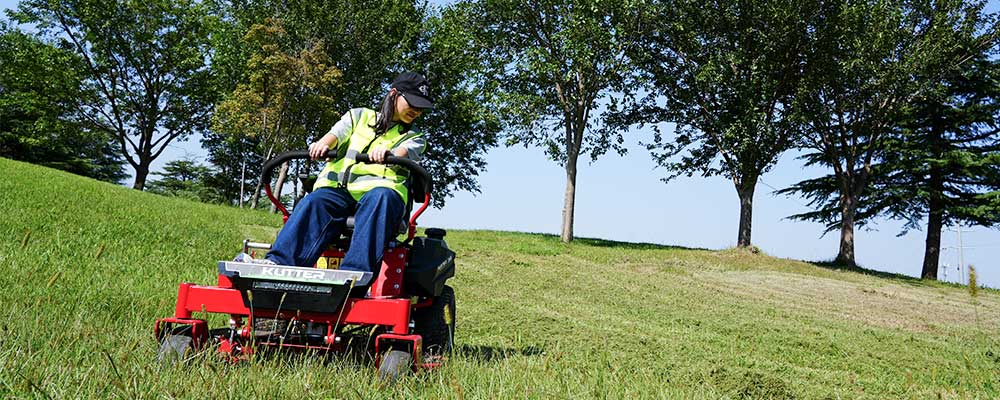
Postpone work when grass is wet, soil is loose, mud is present, frost reduces grip or clippings create a slippery layer. Look for erosion, animal holes, exposed roots and recently disturbed soil. Traction can change within one pass, so a route that felt stable earlier may not remain stable after rain or irrigation.
4. Complete the pre-operation check
Confirm tire condition and pressure according to the manual; test steering and braking response on level ground; check for fluid leaks; ensure guards and shields are installed; secure the seat and rollover-protection components where fitted; remove loose cargo; and verify that blades disengage correctly. Link this inspection to the zero turn mower maintenance checklist.
5. Plan the route and escape space
Keep people and animals outside the work zone. Establish a no-mow buffer around drop-offs, water and retaining edges. Plan how to approach, turn and leave without abrupt steering or acceleration. Avoid turning toward a downhill hazard. If there is no stable runout or recovery area, use a safer method or different equipment.
6. Operate smoothly
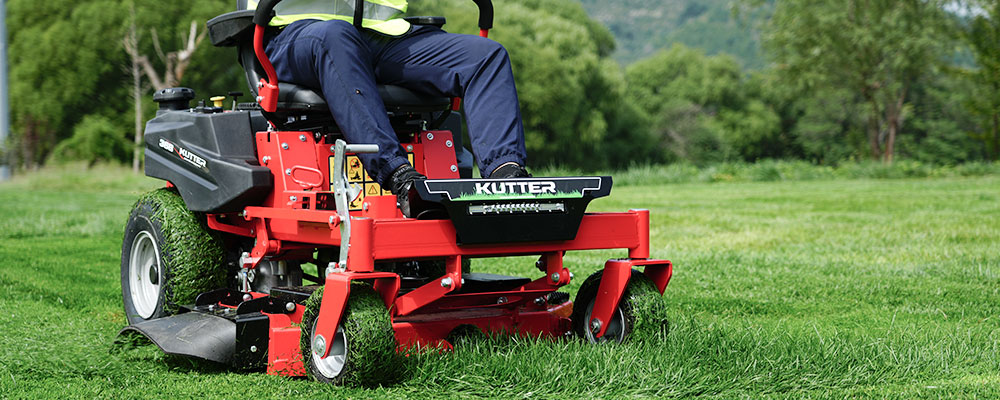
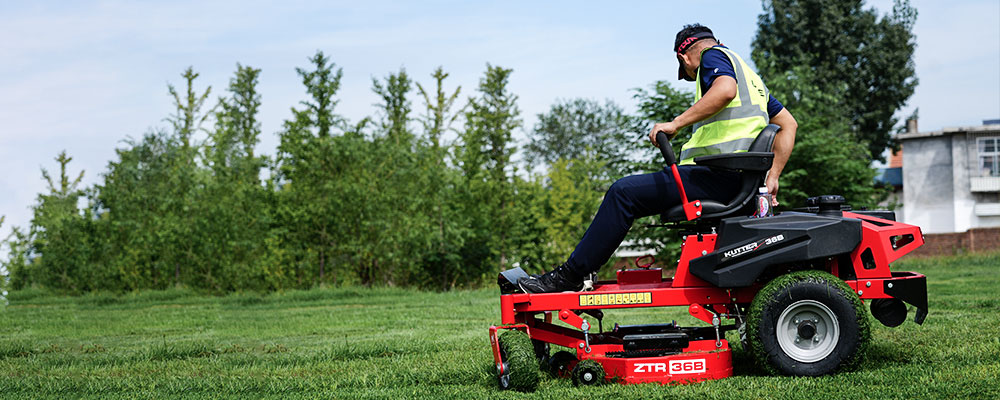
Use a controlled speed that preserves traction and steering authority. Avoid sudden starts, stops and direction changes. Do not carry passengers. Keep the deck and attachments in the configuration required by the manual. Stay alert to wheel slip, front-end lightness, downhill drift and steering delay—these are warning signs, not performance challenges.
7. Stop-work conditions
Stop immediately if traction is uncertain, the mower slides, steering response changes, the ground gives way, visibility is poor, an obstacle cannot be identified, weather deteriorates or the operator feels unsafe. Disengage blades and leave the area using the safest method described in the manual. Do not attempt a recovery maneuver that increases rollover exposure.
What to use instead
A steep or unstable zone may need a walk-behind mower, remote-controlled equipment, string trimming, landscape redesign or professional assessment. Selecting another tool is a risk-control decision, not lost productivity. For large-property planning, see the large residential estate mower guide.
Stop-Work Triggers — If Any of These Fire, Park the Machine
Stop mowing immediately and disengage blades when:
You feel wheel slip or the mower drifts downhill regardless of steering input
The front wheels lift or steering feels light/loose
You cannot see a drop-off, ditch, or hidden hole close ahead of your path
The ground gives way under a tire — sinkholes, soft shoulders, eroded edges
Weather shifts: rain starts, wind gusts increase, visibility drops
You feel uncertain: if instinct says stop, stop — don't "power through"
Never attempt a recovery maneuver that increases slope exposure. Exit the area using the escape procedure described in your operator manual.
Frequently Asked Questions
What slope can a zero turn mower safely handle?
Refer to your operator manual for the manufacturer's stated maximum slope. Most commercial manuals specify a limit — but that number assumes dry, firm turf with a trained operator. Wet grass, loose soil, uneven terrain, or operator inexperience can make a slope unsafe even within the manufacturer's stated angle. Always cross-reference the manual's limit with actual site conditions and personal experience on the machine. If you cannot find the number in your manual, contact the manufacturer before proceeding.
Is it safe to mow across a slope with a zero turn?
Most manufacturers recommend mowing up and down slopes, not across them. Side-hill operation shifts the machine's center of gravity laterally, which can increase rollover risk. If you must traverse a slope, reduce speed, keep the deck higher, and plan your turn at the top or bottom — never turn while mid-slope. Confirm the manufacturer's specific guidance for your model.
What equipment should I use instead of a zero turn on steep slopes?
For slopes that exceed your machine's manufacturer-stated limit, consider:
Walk-behind mower — lower center of gravity for moderate grades
Remote-controlled slope mower — designed specifically for severe inclines
String trimmer / brush cutter — for small, steep patches
Landscape redesign — terrace or replace turf with ground cover on permanent grades
The safe alternative depends on the specific slope angle, surface condition, and accessible area.
Does zero turn mower weight affect slope safety?
Yes. Heavier machines (like the 646 kg ZTR-72C) generate more downhill force and are harder to recover once sliding begins. Lighter residential models may feel more agile but can have narrower track widths that reduce lateral stability. No single weight class is universally safer — the machine must be matched to the specific slope.
What pre-operation checks matter most for slope mowing?
Tire pressure (match side-to-side, inflate to manual spec), steering and brake response on level ground, blade-disengagement function, and rollover-protection system readiness.
Final 10-Point Slope Mow Checklist
Before matching equipment to a specific property, review commercial zero turn mowers and model-specific specifications such as ZTR-72C specifications.
Slope Safety Is a Decision, Not a Dare
The safest mower on a slope is the one that stays within its limits. Use this checklist before every slope job, train your operators on stop-work triggers, and remember that choosing a different tool is not a failure — it's risk management.

Questions About Slope Safety?
Our team can walk you through machine limits, site assessments, and operator training resources.
Contact Us
Related Products


ZTS-32B
hot selling index
CM25
hot selling index