
 Español
 العربية
 Francés
 Русский
 Português
 Deutsch
 Italiano
 Polski
 Malay
 日本語
 한국어
 Nederlands
 Indonesia
 български
 Українська
 فارسی
 اوردو
 тоҷикӣ
 বাংলা






Leaf Blower CFM vs MPH: What Matters for Wet Leaves and Large Grounds
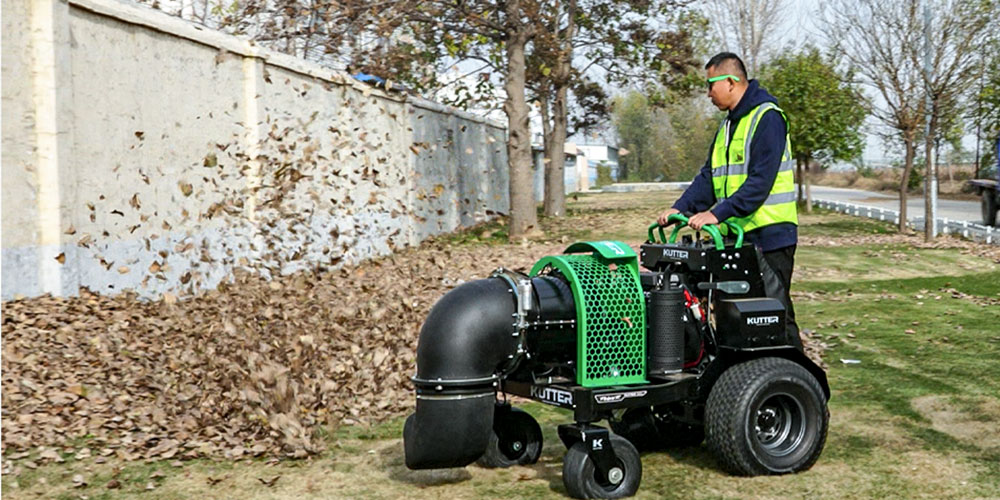
Quick answer: CFM is the volume of air a blower moves; MPH is how fast that air leaves the nozzle. Volume clears wide, open ground. Velocity breaks up wet, matted or compacted material. Neither figure works on its own — nozzle size, duct design and impeller shape decide what the published numbers actually do on your site.
This guide is written for European dealers, grounds contractors and municipal buyers who have to choose between commercial machines from a spec sheet. It will help you decide which airflow balance to specify for your own mix of wet leaves, open hardstanding and narrow access routes — and how to convert US units into the metric figures your customers ask for.
On This Page
What Does CFM Measure on a Leaf Blower?
CFM means cubic feet per minute: the volume of air passing through the machine every minute. Think of it as the width of your working swipe. A blower with a high volume figure moves a broad sheet of air, so it pushes light, loose material across a long distance in one pass.
Volume is what makes large open areas economical. On a car park, a school courtyard or a long avenue, the limiting factor is rarely whether the air can lift a leaf — it is how much ground one operator can cover per pass.
A commercial leaf blower built for open ground therefore tends to prioritise volume. That is why the largest machines in a range are usually the ones rated for the biggest air volume, not the highest air speed.
What Does MPH Measure on a Leaf Blower?
MPH means miles per hour: the speed of the air at the point it leaves the nozzle. Think of it as the punch behind the air. A high-velocity stream cuts under material that is stuck, saturated or compressed, and it separates leaves from wet grit where a broad, slow sheet would simply slide over the top.
Velocity is what makes difficult material movable. Wet leaves after a night of rain, leaf litter compacted against a kerb, and debris matted into gravel all resist movement far more than dry leaves on a lawn.
Why Can One Machine Have More CFM and Less MPH?
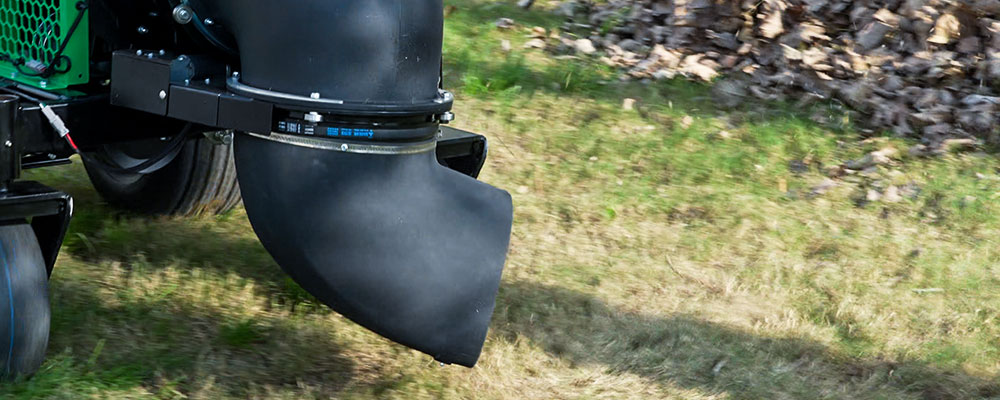
Because volume and speed are linked by the size of the opening the air passes through. For a given impeller and engine power, narrowing the outlet raises velocity and reduces volume; widening it does the opposite. Two machines with identical engines can carry very different published figures simply because their discharge geometry differs.
Three design factors sit behind every pair of numbers:
Impeller and housing shape. These set how much air the machine can actually move before losses build up.
Duct routing. Long or tightly curved ducting costs velocity. A short, straight path preserves it.
Nozzle cross-section and control. A rotating or adjustable nozzle changes where the air goes, and a removable end cap changes both figures at once.
This is why a larger CFM figure is not automatically "the stronger machine". A 6,000 CFM rating paired with a lower velocity suits bulk displacement on open ground. A 4,500 CFM rating paired with a much higher velocity suits breaking up matted material. Compare the pair, never one number.
How Do You Convert CFM and MPH to Metric Figures?
Most European tenders and dealer spec sheets work in m³/h and km/h. The conversions are fixed, so you can check any supplier figure yourself.
| Measure | Imperial figure | Metric equivalent | Conversion |
|---|---|---|---|
| Air volume | 1 CFM | ≈ 1.70 m³/h | × 1.699 |
| Air volume | 1,000 CFM | ≈ 1,699 m³/h | × 1.699 |
| Air speed | 1 mph | ≈ 1.61 km/h | × 1.609 |
| Air speed | 100 mph | ≈ 161 km/h | × 1.609 |
Round the result rather than publishing false precision. A rating of 4,500 CFM is better written as roughly 7,650 m³/h than as a figure with two decimal places that no test report supports.

Which Airflow Balance Suits Wet Leaves, Car Parks and Narrow Access?
Use the matrix below as the first filter. It turns the two numbers into a specification question you can put in front of a customer.
| Ground condition | What resists the work | Priority | What to check |
|---|---|---|---|
| Wet, matted leaves | Surface tension, compaction | Higher velocity | Rated air speed at the nozzle |
| Dry, loose leaves | Low resistance, wide spread | Higher volume | Rated air volume in m³/h |
| Large car parks / hardstanding | Distance and area per pass | Higher volume | Air volume plus nozzle reach |
| Fine turf and lawns | Risk of surface damage | Controlled, directed flow | Adjustable nozzle and speed control |
| Narrow access, paths, beds | Precision near obstacles | Directed velocity | Handheld or walk-behind format |
If your routes are dominated by the top and bottom rows — wet material and tight access — specify velocity and control first. If they are dominated by the middle rows, specify volume. Most mixed fleets need both, which is why contractors often run more than one machine class rather than one compromise unit.
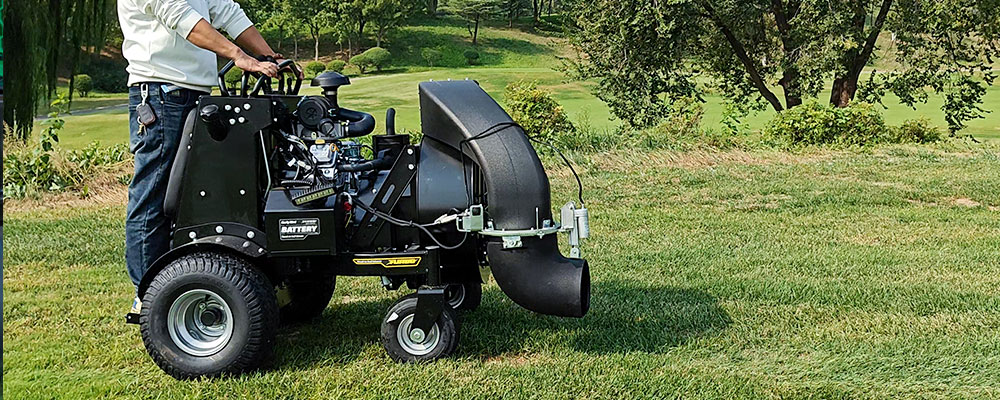
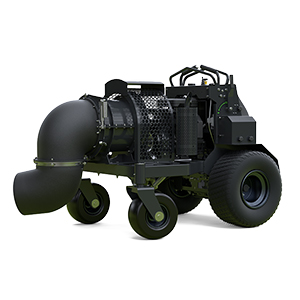
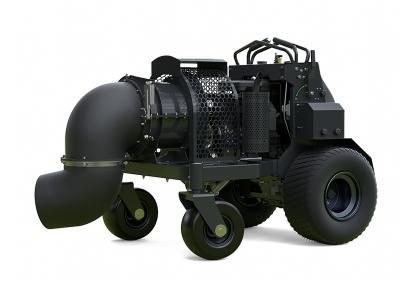
Where a narrow route or a gate width limits the machine, the format matters as much as the figures: a stand-on leaf blower carries a different footprint and operator position from a walk-behind unit, and that changes which sites it can physically reach.
Once you have matched the matrix to your own route list, ask for the rated airflow figures for the specific models you are shortlisting. Published ratings vary with nozzle configuration, so confirm the figures against the configuration you intend to order.
How Do You Compare Two Blowers on One Sheet?
Put both machines on one line of comparison and require the same four data points from each supplier. This keeps the comparison about airflow rather than marketing.
| Check | Why it changes the comparison |
|---|---|
| Air volume and air speed, quoted together | A single number cannot describe the machine |
| Nozzle configuration the figures were measured with | Changing the nozzle changes both figures |
| Impeller drive and housing layout | Sets how much air is available before losses |
| Operator format and working width | Decides whether the machine reaches the site |
The table below shows how three KUTTER configurations publish different balances, including a commercial walk-behind leaf blower alongside the two stand-on layouts.
| KUTTER configuration | Rated air volume | Rated air speed | Published balance |
|---|---|---|---|
| Turbine stand-on | 4,500 CFM (≈ 7,650 m³/h) | 165 mph (≈ 265 km/h) | Mid volume, high velocity |
| Ducted stand-on | 6,000 CFM (≈ 10,190 m³/h) | 102.5 mph (≈ 165 km/h) | High volume, moderate velocity |
| Walk-behind LB-2 | 2,700 CFM (≈ 4,590 m³/h) | 165 mph / 264 kph | Low volume, high velocity |
Read this as a balance, not a ranking. The turbine stand-on and the walk-behind LB-2 publish the same air speed, but at very different volumes — the LB-2 moves far less air, so it covers less ground per pass. The ducted stand-on publishes more than double the LB-2's volume at a lower speed. The right choice follows from the matrix above, not from which number is bigger.
Published figures apply to the configuration they were measured on. Confirm the rating against the nozzle and machine configuration you intend to order.
What Else Should You Verify Before Ordering?
Three items sit outside the airflow figures but change whether those figures hold up in service.
Confirm the configuration being quoted. A nozzle or end-cap change alters both ratings, so the quoted machine must match the tested machine.
Confirm the engine and drive layout. Published airflow is a system result, not an engine property.
Confirm operator format against site access. The best airflow balance is unusable if the machine cannot enter the site.
Airflow is also a maintained property, not a permanent one. A worn impeller, a damaged housing or a blocked intake screen all reduce the air the machine can move, so the figures above describe a machine in correct condition.
Frequently Asked Questions
Is higher CFM always better on a leaf blower?
No. Higher CFM moves more air, but if the air leaves the nozzle slowly it will slide over wet, matted material. Match volume to open ground and velocity to compacted material, then check both figures on the same configuration.
What CFM do I need for wet leaves?
There is no universal threshold, because wet leaves resist movement more than volume alone overcomes. Prioritise air speed and an adjustable nozzle for saturated material, and confirm the rated velocity for the specific model and configuration.
How do I convert leaf blower CFM to m³/h?
Multiply the CFM figure by 1.699. A machine rated at 4,500 CFM moves roughly 7,650 m³/h. Round the result rather than publishing decimals the test report does not support.
How do I convert MPH to km/h on a leaf blower?
Multiply the mph figure by 1.609. A rating of 165 mph is roughly 265 km/h at the nozzle.
Do nozzle and duct design really change the published figures?
Yes. For a given impeller and engine, narrowing the outlet raises velocity and reduces volume. Long or sharply curved ducting also costs velocity. That is why two machines with similar engines can publish very different pairs of numbers.
Should I buy one high-volume machine for every site?
Only if every site is open ground. Mixed routes — wet leaf fall, narrow access and sensitive turf — usually justify more than one machine class. Compare formats across the commercial leaf blowers range before standardising on a single unit.
Bottom Line
CFM and MPH describe two different jobs. Volume clears ground fast on open sites; velocity breaks up material that is stuck or saturated. The right machine is the one whose balance matches your route, not the one with the biggest single number.
Before you specify, confirm the nozzle configuration, ask for metric conversions, and match the airflow balance to the ground conditions your crews actually face.

Need Help Matching Airflow to Your Routes?
Send us your route mix — open hardstanding, wet leaf fall and narrow access — and we will return the rated airflow figures for the matching models, with the nozzle configuration each figure was measured with.
Contact Us
Related Products

ZTS-32B
hot selling index
DTBH22
hot selling index

CS750Pro
hot selling index