
 Español
 العربية
 Francés
 Русский
 Português
 Deutsch
 Italiano
 Polski
 Malay
Malay
 日本語
日本語
 한국어
한국어
 Nederlands
 Indonesia
 български
 Українська
 فارسی
فارسی
 اوردو
اوردو
 тоҷикӣ
 বাংলা
বাংলা






Zero Turn Dealer Profit Model: Margins & ROI Calculator
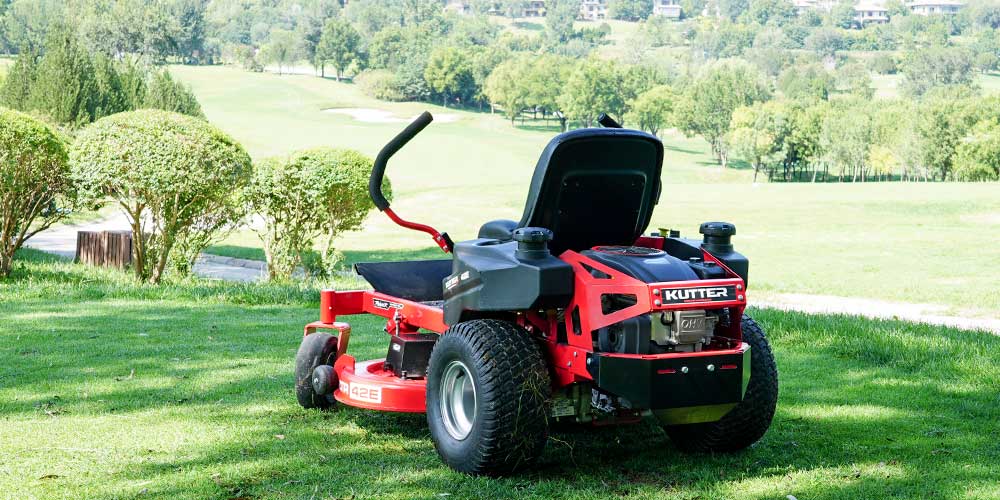
If you run a zero turn mower dealer profit model — or you're thinking about building one — the question isn't whether the market is big enough. It is. The global zero-turn mower market hit $3.75 billion in 2025 and is projected to reach $6.68 billion by 2034, growing at a 6.7% CAGR. The real question is: are you keeping enough of every dollar that flows through your dealership?
Most dealers track sales volume. The ones who actually grow track six numbers: gross margin per unit, inventory turnover, cash flow, operating expenses, financing terms, and return on inventory investment. This article walks through all six — and at the end, you'll find a free ROI calculator you can use to model your own numbers.
On This Page
The Zero Turn Mower Dealer Landscape: Market Size & Opportunity
Zero-turn mowers are no longer a niche product for golf courses. They've become the standard for commercial landscapers, municipalities, and even large residential properties. Asia Pacific alone accounts for 38.7% of global demand, and North America remains the largest single market by revenue.
What does that mean for a dealer? It means demand isn't the bottleneck. The bottleneck is how efficiently you turn that demand into profit.
Dealers typically stock both residential zero-turn mowers and commercial models. Understanding Hydro-Gear transmission differences also helps dealers explain technical value when customers compare entry-level and upgraded units.
A dealership that sells 200 units at a 12% net margin earns more than one that sells 350 units at 5%. The dealers who consistently grow treat each unit as a financial decision, not just a sales transaction.
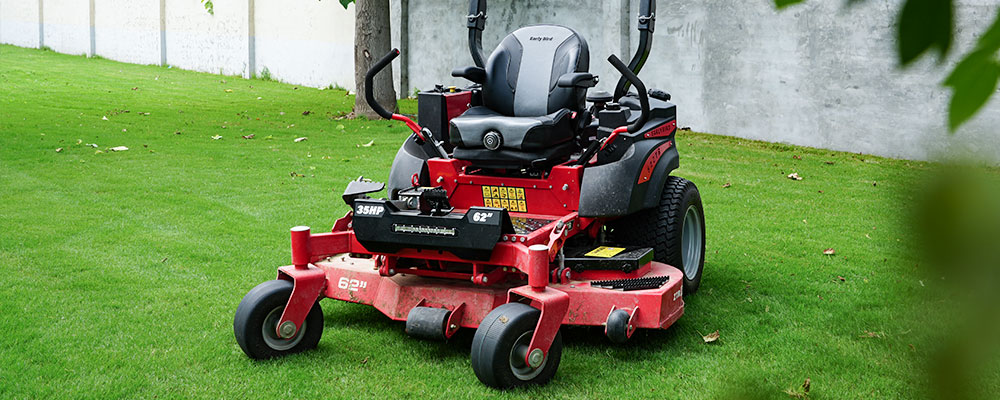
The 6 Metrics Every Zero Turn Mower Dealer Must Track
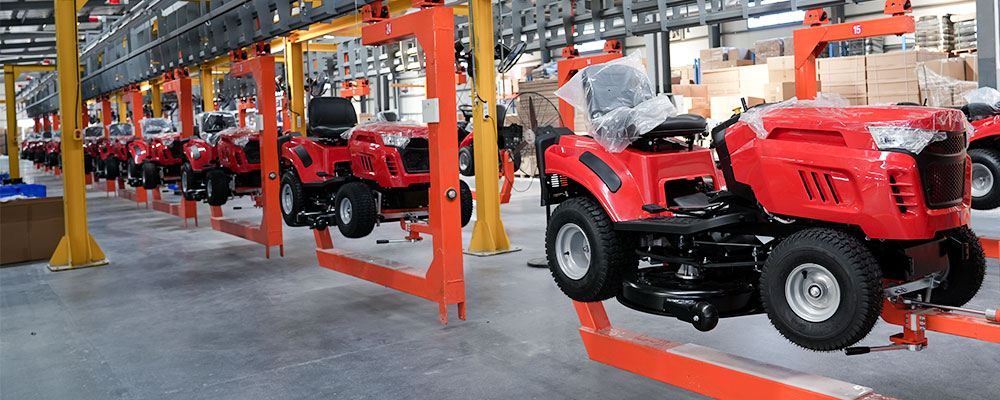
Metric 1: Gross Margin — How Much You Actually Keep Per Sale
Your lawn mower dealer margin is the single most important number on your P&L — and the one most dealers get wrong because they confuse markup with margin.
Markup = (Selling Price − Cost) ÷ Cost
Gross Margin = (Selling Price − Cost) ÷ Selling Price
If you buy a mower for $4,000 and sell it for $6,000, your markup is 50%, but your gross margin is 33%. That 33% is what you have left to cover rent, staff, marketing, warranty reserves, and profit.
Major Brand vs OEM Brand: Margin Comparison
| Channel | Typical Gross Margin | Key Constraint |
|---|---|---|
| Major brand distribution | 18–25% | MAP restrictions, distributor markups |
| OEM direct (factory) | 30–40% | Logistics responsibility on dealer |
An OEM dealer partnership changes the math. When you buy direct from the factory, you eliminate the distributor layer entirely. A mower that costs a dealer $8,500 through a major brand's distribution chain might cost $4,300 from an OEM — for a comparable machine. The gross margin difference can be 2x or more, even after accounting for shipping and import logistics.
Pricing Strategy: MAP, Floor Planning, Seasonal Discounts
Your zero turn mower dealer pricing strategy lives inside three constraints:
MAP (Minimum Advertised Price) — Major brands enforce this aggressively. Violate it, and you risk losing your territory. OEM brands often give you pricing flexibility.
Floor Planning — That mower sitting on your lot costs you money every day. At a typical 5–7% floor-plan rate, a $6,000 unit costs about $0.80–$1.15 per day just to hold. Over 90 days, that's $72–$104 in carrying cost.
Seasonal Discounts — Most dealers discount in October–December to clear inventory, but the smart ones pre-sell in January–February with early-bird pricing to lock in spring delivery.
Metric 2: Inventory Turnover — The Silent Profit Killer
Inventory turnover measures how many times you sell through your stock in a year. The formula:
Inventory Turnover = Cost of Goods Sold ÷ Average Inventory Value
For zero turn mower inventory turnover, the industry benchmark is 4–6 turns per year for a well-run dealership. Below 3, and you're bleeding cash. Above 8, and you're probably leaving sales on the table by stocking too lean.
The 3-6-9 Rule: How Many Units Should You Stock?
Peak Season vs Off-Season: Cash Flow Implications
In most North American markets, 70–80% of zero-turn sales happen between March and August. That means for six months, you're collecting revenue. For the other six, you're still paying rent, insurance, and staff — but inventory is sitting.
Smart lawn mower dealer cash flow management means building a reserve during peak months equal to 4–6 months of operating expenses. If your monthly burn rate is $15,000, you need $75,000–$90,000 in the bank by September 1.
Metric 3: Cash Flow — The 12-Month Roadmap for a New Dealership
Building a zero turn mower dealership profit model means accepting that Year One is about survival, not profit. Here's a realistic 12-month cash flow projection for a new single-location dealer:
| Month | Activity | Cash Position |
|---|---|---|
| Jan–Feb | Pre-season marketing, order initial stock | Negative ($20K–$40K outflow) |
| Mar–May | Peak selling season begins | Breakeven by May |
| Jun–Aug | Strongest revenue months | Positive (build reserve) |
| Sep–Nov | Tapering sales, off-season prep | Neutral to slightly positive |
| Dec | Year-end clearance, plan next year | Draw on reserve |
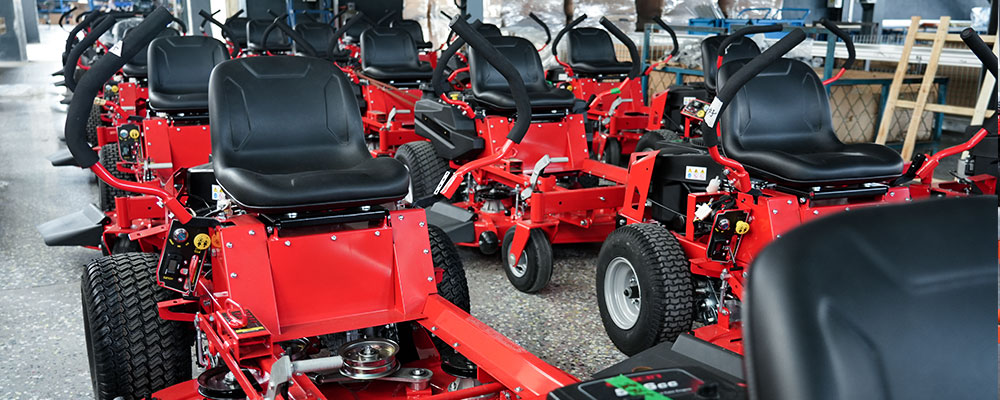
Start-Up vs Established Dealer
A new dealer's zero turn mower dealer business plan should assume 12–18 months to positive cash flow. Key differences:
Start-Up: Negotiate 90-day payment terms with suppliers. Minimize fixed overhead. Consider a smaller initial order — 4–6 units — to validate demand before scaling.
Established Dealer: Focus on inventory optimization. Use historical sales data to predict seasonal demand by SKU. Negotiate volume rebates rather than payment terms.
Metric 4: Operating Expenses — Where Dealers Lose Money
If gross margin is your top line, operating expenses are where it disappears. The three biggest line items for most dealerships:
The Hidden Costs: Warranty, Returns, Demo Units
Don't overlook the less visible costs:
Warranty reserve — Set aside 1–2% of revenue for warranty claims that aren't covered by the manufacturer.
Returns and exchanges — Rare for commercial equipment but expensive when they happen (shipping, refurbishment, lost margin).
Demo units — Every demo mower on your lot is depreciating. If you demo a $5,000 unit for a season and sell it as "used" for $4,000, that's a $1,000 cost of sale.
Metric 5: Financing & Terms — Making It Easier to Sell
Most commercial landscapers don't pay cash for a zero-turn mower. They finance. And the terms you can offer directly affect your close rate.
4.9–12.9% APR: What Your Customers Can Afford
| Credit Profile | FICO Range | APR Range | Terms |
|---|---|---|---|
| Prime | 720+ | 4.9–7.9% | 24–60 months |
| Near-Prime | 650–719 | 7.9–10.9% | 24–60 months |
| Subprime | 600–649 | 10.9–12.9% | Shorter terms |
At 7.9% APR over 48 months, a $6,000 mower costs about $146/month. At 12.9%, it's $161/month. That $15 difference can be the deciding factor for a small landscaping business.
Partnering with a lender that offers 0% promotional financing for 12 months can be a powerful sales tool — especially during pre-season when customers are planning their equipment budget.
Metric 6: ROI Calculator — Should You Stock 5 or 50 Zero Turns?
This is where everything comes together. The commercial zero turn mower ROI calculator answers the question: for every dollar I invest in inventory, how much profit does it generate?
ROI Formula
ROI = (Annual Gross Profit from Zero-Turns − Carrying Costs) ÷ Average Inventory Value × 100
Example: A dealer stocks 10 units at an average cost of $4,500 each = $45,000 in inventory. Annual gross profit on those units is $22,500. Floor-plan interest and insurance cost $2,700. Net profit = $19,800.
ROI = $19,800 ÷ $45,000 × 100 = 44%
Real-World Example: Dealer Inventory ROI Breakdown
| Variable | Value |
|---|---|
| Units stocked | 8 zero-turn mowers |
| Average unit cost | $4,300 |
| Total inventory investment | $34,400 |
| Average selling price | $6,500 |
| Gross margin per unit | 33.8% ($2,200) |
| Annual gross profit (1.5 turns) | $26,400 |
| Floor-plan cost (7% × avg inventory) | $2,408 |
| Insurance & storage | $1,200 |
| Net profit | $22,792 |
| ROI on inventory | 66.3% |
At a 66% return, every dollar tied up in zero-turn inventory generates $1.66 in annual net profit — before accounting for service revenue, parts sales, and repeat customer referrals.
Territory Protection & MAP: How Major Brands Trap Dealers
One of the most overlooked aspects of zero turn mower dealer territory rights is how they constrain your growth.
Major brands assign exclusive territories — which sounds like protection. In practice, it means you can't sell outside your zip codes, but the brand can place another dealer five miles away if they decide your territory is "underserved." Meanwhile, MAP policies cap your pricing power.
OEM Direct: Why Factory Partnership Beats Distributor Margins
An OEM dealer partnership flips this dynamic:
No distributor markup — You buy at factory-direct pricing, which can be 30–50% below major-brand wholesale
Flexible pricing — Set your own margins without MAP enforcement
Territory flexibility — Sell where the demand is, not where a brand tells you to
Direct support — Deal with the factory engineering team, not a regional distributor's help desk
Learn more about OEM partnerships on our factory partnership page.
The Dealer Financial Playbook: Your 6-Month Action Plan
FAQ
What is the average dealer margin on zero turn mowers?
Most dealers operating under major-brand distribution networks see 18–25% gross margin on zero-turn mowers. Dealers who buy direct from an OEM can achieve 30–40% gross margin by eliminating the distributor markup. The exact number depends on your pricing strategy, volume, and whether you offer bundled service packages.
How many zero turn mowers should a dealer stock?
As a starting point, follow the 3-6-9 rule: 3 units for part-time or seasonal operations, 6 units for a single-location dealership, and 9+ units for a full-line store covering multiple brands and configurations. Let your inventory turnover target (4–6 turns/year) and local demand data guide the final number.
What financing options are available for zero turn mower dealers?
Dealers typically offer customer financing through third-party lenders at 4.9–12.9% APR, depending on the buyer's credit profile. Promotional 0% APR for 12 months is a strong pre-season selling tool. On the dealer side, floor-plan financing through manufacturers or banks typically runs 5–7% APR on unsold inventory.
Is it better to partner with an OEM or buy from a distributor?
For dealers focused on margin and pricing flexibility, an OEM partnership is typically more profitable. You eliminate the distributor layer (saving 20–40% on wholesale cost), gain pricing autonomy, and work directly with the factory. The trade-off is that you take on more logistics responsibility — but for many dealers, the margin improvement more than compensates.
How do I calculate ROI for my zero turn mower inventory?
Use the formula: ROI = (Annual Gross Profit − Carrying Costs) ÷ Average Inventory Value × 100. Include all carrying costs — floor-plan interest, insurance, storage, and depreciation on demo units. Aim for a minimum of 30% annual ROI on your zero-turn inventory. A well-run operation can hit 50–70%.
What is a territory rights agreement and why does it matter?
A territory rights agreement defines the geographic area where you have exclusive rights to sell a brand's products. Major brands use these agreements to prevent dealer overlap — but they also restrict your ability to expand. Before signing any territory agreement, understand the renewal terms, performance requirements (minimum volume quotas), and whether the brand can modify boundaries unilaterally.
Ready to Run Your Own Numbers?
Download our free Zero Turn Mower Dealer ROI Calculator — plug in your costs, margins, and stocking levels to forecast your dealership's profitability. For a personalized consultation on building your dealership's financial roadmap, contact the KUTTER team.

Build Your Dealership's Financial Roadmap
Get personalized guidance on margins, inventory strategy, and OEM partnerships.
Request a Consultation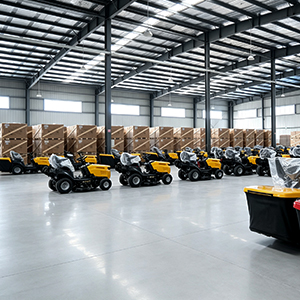
Related Products


ZTR-72C
hot selling index
All-Terrain Cargo & Utility Trailer
hot selling index

SLBH22
hot selling index
