
 Español
 العربية
 Francés
 Русский
 Português
 Deutsch
 Italiano
 Polski
 Malay
Malay
 日本語
日本語
 한국어
한국어
 Nederlands
 Indonesia
 български
 Українська
 فارسی
فارسی
 اوردو
اوردو
 тоҷикӣ
 বাংলা
বাংলা






How Terrain Affects the Performance and Safe Selection of Commercial Lawn Mowers
For commercial lawn care companies, the complexity of the job site terrain is a core determinant in both equipment selection and safe operation. Incorrect terrain-equipment pairing not only drastically reduces efficiency but also poses serious operational risks, including rollovers and worker injuries. This article explores in depth how terrain affects mower performance and provides selection and operation guidelines based on safety and efficiency.

Terrain Risk Assessment: The First Step to Safe Operation
A professional terrain assessment is crucial before starting any mowing project. This is fundamental not just for efficiency, but for life safety. According to safe operating guidelines, a thorough site survey should be conducted to identify the following hazards:
Slopes: Precisely measure the slope angles of the work area.
Edge Hazards: Such as steep drop-offs, curbs, retaining walls, ditches, and the edges of water bodies (ponds, creeks, lakes).
Surface Conditions: Including wet/slippery areas, soft ground, hidden rocks, tree stumps, and man-made obstacles (e.g., signs, trash receptacles).
Key Action: Establish a safety buffer zone. During operation, ensure the equipment's drive wheels are at least 5 feet (measured from the outside edge of the tire) from any unprotected edge (like a steep slope or water's edge). Within this buffer zone, only use walk-behind mowers or string trimmers.
Slope: The Golden Rule for Equipment Selection
Slope is the single most critical terrain factor affecting safety. Different slopes impose strict limitations on equipment.
| Slope Range | Recommended Equipment | Key Safety Notes |
|---|---|---|
| 0° - 10° | Zero-Turn / Riding Mowers | Most commercial zero-turn mowers can operate safely and efficiently on these slopes. Always adhere to the manufacturer's stated slope limits (typically found on a decal on the machine). |
| 10° - 15° | Extreme Caution Required | Rollover risk for zero-turn mowers increases significantly. Stand-on zero-turn mowers offer greater stability than sit-down models due to a lower center of gravity. Always mow up and down the slope, never across it. |
| 15° - 22° | Specialized Tractors or Slope Mowers | Standard commercial riding mowers are not suitable. Consider professional-grade tractors or slope-specific mowers equipped with Roll-Over Protective Structures (ROPS) and seat belts. |
| Above 22° | Walk-Behind Equipment or String Trimmers | This is the only safe option. Operation must be conducted using push mowers or backpack string trimmers. |
Important Note: In the absence of specific manufacturer instructions, 15 degrees should be considered a general safety slope limit. Using a slope gauge (clinometer/inclinometer) for accurate measurement is standard practice for professional companies.
Core Safety Features: Non-Negotiable Equipment Requirements
When selecting equipment for complex terrain, the following safety features are baseline requirements that must be verified:
Roll-Over Protective Structure (ROPS) and Seat Belt:
If the equipment has designated ROPS mounting points (e.g., unused bolt holes or brackets), the ROPS must be installed.
It is prohibited to operate equipment that was designed for a ROPS without it installed.
ROPS and seat belts must be used together. When the ROPS is in the raised (active) position, the seat belt keeps the operator within the protective zone during a rollover.
Lower the ROPS to the "inactive" position only when vertical clearance is insufficient, and do not use the seat belt in this configuration.
Operator Presence Control System:
Ensure the equipment has a system that automatically disengages the mower blades when the operator leaves the seat or stands up.
Safety Interlocks:
Equipment should have interlocks that prevent the engine from starting while the mower is in gear or the blades are engaged.
Key Points for Professional Operator Training on Complex Terrain
Providing systematic training for your crew is critical to mitigating risk. Training should cover:
Pre-Operation Site Inspection: Develop the habit of walking the site before mowing to identify and mark all hazards.
Slope Operation Techniques:
Always mow straight up and down slopes, absolutely avoid mowing across them.
Reduce speed before going downhill; avoid sudden turns or braking.
Never start, stop, or change direction on a slope.
Equipment Operation Discipline:
Keep both feet on the machine before starting.
Never mount or dismount while the machine is running.
Never carry passengers.
Always turn off the engine, set the brake, and remove the key before leaving the equipment unattended.
Personal Protective Equipment (PPE): Must wear safety helmets, eye protection, hearing protection, and slip-resistant work boots. Avoid loose clothing and jewelry.
Conclusion: Integrating Terrain Safety into Procurement and Operational Decisions
Selecting a commercial mower for complex terrain goes far beyond comparing engine horsepower and cutting width. It is a comprehensive safety decision-making process:
Assess: Systematically evaluate and categorize the terrain of all typical properties you service.
Match: Match the type of equipment that is safely permitted to each terrain category based on slope, edges, and obstacles.
Verify: During procurement, verify that the equipment includes mandatory safety features like ROPS and seat belts.
Train: Provide operators with ongoing, terrain-specific safety and equipment operation training and evaluation.
Maintain: Establish a regular safety inspection schedule to ensure all safety devices remain functional.
By placing terrain analysis at the heart of equipment selection and job planning, lawn care companies can not only dramatically improve operational safety and professionalism but also achieve better long-term ROI through extended equipment life and reduced accident-related downtime.
Internal Link Strategy: To learn more about the comprehensive guide on selecting equipment based on various working conditions, read
our central decision-making article: Commercial Lawn Mower Selection Guide.
https://www.kutterpower.com/support-resources/commercial-lawn.html
Related Products

CM25
hot selling index
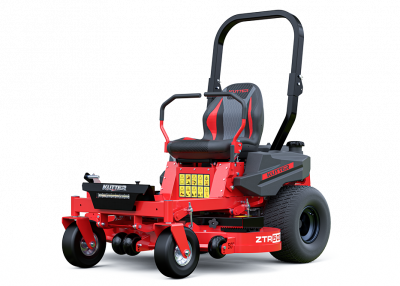
ZTR-50B
hot selling index
LB1
hot selling index