
 Español
 العربية
 Francés
 Русский
 Português
 Deutsch
 Italiano
 Polski
 Malay
Malay
 日本語
日本語
 한국어
한국어
 Nederlands
 Indonesia
 български
 Українська
 فارسی
فارسی
 اوردو
اوردو
 тоҷикӣ
 বাংলা
বাংলা






Choosing the Right Cutting Width for Commercial Lawn Mowers

Cutting Width and Efficiency: The Direct Mathematical Relationship
The relationship between deck width and mowing time is linear and significant. A wider deck covers more ground per pass, directly reducing labor hours.
A Simple Calculation: For open, unobstructed terrain, moving from a 48-inch deck to a 60-inch deck increases your cutting swath by 25%. This can translate to a similar reduction in mowing time for the same area.
The Time Factor: As a benchmark, a mower with a 42-inch deck can typically mow approximately one acre of flat, open lawn in one hour. Commercial operations must scale this calculation based on their average property size and fleet capabilities to accurately estimate job scheduling and labor costs.
The Commercial Threshold: For residential users, a ¼-acre is often the threshold for considering a riding mower. In the commercial realm, properties exceeding two acres almost always necessitate a commercial-duty zero-turn mower to complete the work within a viable timeframe. The choice then becomes which deck size on that commercial platform is optimal.
The Myth of “Bigger is Always Better”: Why Terrain and Obstacles Dictate Reality
While a wide deck promises speed, it can become a liability on complex properties. The key is to balance raw cutting power with necessary maneuverability.
Maneuverability vs. Width: A 72-inch mower excels on a sod farm or athletic field but will struggle in a corporate park dotted with trees, light poles, and landscaping beds. The time lost navigating tight spaces, making multiple-point turns, and avoiding "scalping" on uneven ground can negate the speed advantage.
Terrain is King: Wide mowers perform best on flat, open ground. On sloped or uneven terrain, a deck that is too wide can scalp high spots and miss low spots, leading to an uneven cut and potential turf damage. For hilly or rugged properties, a mower with a slightly smaller deck but a more powerful engine and robust construction often provides a better combination of speed, control, and quality.
The Obstacle Factor: Properties with numerous obstacles (trees, planters, fences, playgrounds) increase the required "trimming time." A narrower, more agile mower (e.g., 36-48 inches) may achieve a faster overall job completion by reducing both the primary mowing and secondary trimming times.
Recommended Deck Sizes by Property Type and Terrain
Use this data-driven guide to match deck size to common commercial scenarios:

Real-World Application: Making the Strategic Choice
Related Products

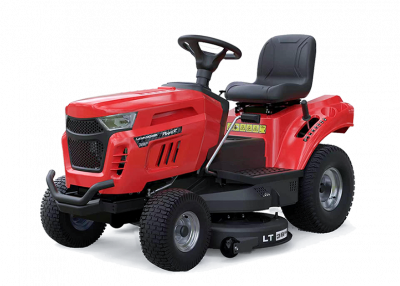
LT-38S
hot selling index

ZTR-54C
hot selling index
