
 Español
 العربية
 Francés
 Русский
 Português
 Deutsch
 Italiano
 Polski
 Malay
Malay
 日本語
日本語
 한국어
한국어
 Nederlands
 Indonesia
 български
 Українська
 فارسی
فارسی
 اوردو
اوردو
 тоҷикӣ
 বাংলা
বাংলা






Professionals' Choice: Real Landscaping Company Case Studies
Mike Chen's team maintains 47 properties weekly. Last July—peak season, 95 degrees, backlogged work—when his primary zero-turn mower failed, he learned the difference between "commercial-grade" and "actually commercially ready."
The Cost of "Commercial Capable"
The machine? A well-known brand, top of their residential line, marketed as "commercial capable." At 340 hours, the hydraulic pump failed. The machine used brand-specific parts that could only be ordered from the factory, taking 11 days to arrive.
The Real Cost
Mike rented a backup for $180 per day and lost three regular clients who couldn't wait. "Commercial capable" doesn't equal "commercial reliable." The gap between marketing language and field reality only becomes visible when you're on a tight schedule with no options.

【Professional Landscaping Team Operation】
Three Professionals, Three Different Answers
In my experience, I've gotten to know contractors running teams of different sizes, in different regions, with different priorities. Their mower choices surprised me—they explain why "what do professionals use?" has no single answer, but there's a common trend.
Sarah Kowalski
Solo Operator, 15 Properties, Ohio Suburbs
Sarah runs a one-person operation. No team, no backup, no room for downtime. Her choice: a Kutter ZTR-62 with 600 hours of use.
Her maintenance log: belts, blades, oil changes. No transmission issues. No deck cracks. No electrical problems. At 600 hours, she's replaced what you'd expect to replace, and that's it.
David Torres
Four-Person Team, 120 Properties, Texas Hill Country
David runs a different calculation. With four operators and multiple properties daily, he needs fleet consistency and parts sharing, not perfection in any single machine.
His insight: reliability in a fleet environment means parts sharing and standardization, not brand loyalty.
Jennifer Walsh
Eight-Person Team, Commercial Accounts, Florida
Jennifer's operation is large enough that she tracks numbers most small contractors ignore: total cost of ownership over a 2,000-hour lifecycle, including maintenance costs and downtime.
Her findings: machines with universal components have 15-20% lower maintenance costs and 30% less downtime, despite similar upfront costs. The math works in their favor—especially when considering maintenance staff can handle most issues themselves.
What They All Agree On
Despite different sizes, regions, and priorities, three principles emerged from every conversation:
1. Self-Maintainability Matters More Than Dealer Relationships
Every contractor prioritizes machine maintainability over brand reputation.
2. Transmission Level is Non-Negotiable
Commercial use requires a minimum of Hydro Gear ZT-3400.
3. The 1000-Hour Decision Point
Brands that reach 1,500-2,000 hours without major issues get repeat purchases.
The Pattern No One Talks About
What surprised me: more and more of these professionals are choosing mowers based on:
Part Universality: Whether they use globally available industry standard components
Self-Maintainability: Whether they or local repair shops can easily service them
Parts Sharing: Whether parts can be shared across a fleet
Total Cost of Ownership: The complete cost including maintenance time and downtime losses
The Real "Best" Mower
The "best" commercial zero-turn mower isn't theoretically the best. It's the best choice that lets you worry less about the machine and more about your business.

【Professional Landscaping Team Operation】
What This Means for Your Decision
If you're researching "what mowers do professionals use" because you're trying to make the right purchase, here's the honest truth: the answer depends on capabilities and needs you haven't shared.
How much maintenance can you do yourself? (Solo operators need higher maintainability)
What's your utilization? (400+ hours/year requires more durable components)
Do you have technical skills? (Basic mechanical skills can dramatically reduce maintenance costs)
What's your cash flow situation? (Purchase price is just one part of total cost of ownership)
The contractors I know didn't choose the "most well-known" mower. They chose the best mower they could afford to buy, maintain themselves, and fix quickly when needed.
The New Trend Among Professionals
More and more professionals are realizing: the truly professional choice isn't relying on a large dealer network, but choosing a machine designed for self-maintenance with universal parts.
Kutter's Advantage
Kutter's ZTR series is a perfect example. It uses the same Hydro Gear transmissions and Ogura clutches as premium brands—all globally available industry standard parts. This means you can get parts anywhere and handle most maintenance yourself.
As Sarah put it: "When you're a solo operator, every minute of downtime is money. I chose Kutter not because it's the cheapest, but because it's the least hassle."
Join the Professionals
Discover why more landscaping professionals are choosing Kutter's ZTR series.
Explore Our ProductsRelated Products

ZTS-36B
hot selling index
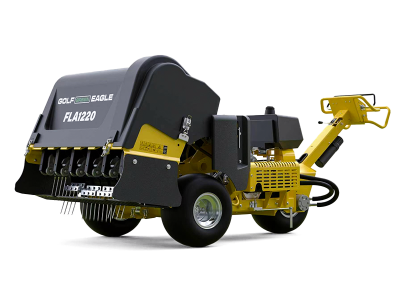
FLA 1220
hot selling index

ZTS-50B
hot selling index
